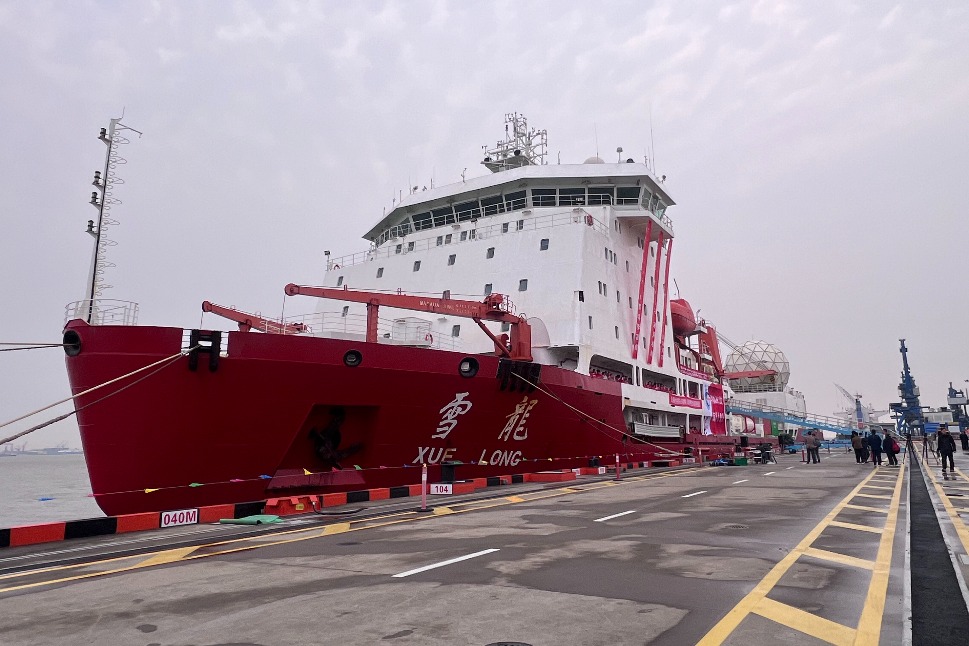
After more than five months of groundbreaking scientific exploration in one of the planet’s most remote and unforgiving environments, China’s iconic research icebreaker Xuelong — meaning “Snow Dragon” in Chinese — sailed back to its home port of Shanghai on Thursday, capping a highly productive voyage as part of the country’s 42nd Antarctic expedition. The expedition’s total runtime stretched to 160 days, during which the vessel and its on-board team of researchers, engineers, and support staff navigated treacherous sea ice, extreme sub-zero temperatures, and harsh wind conditions to carry out a wide range of critical scientific work across the Southern Ocean and Antarctic continent.
As a core component of China’s longstanding polar research program, this expedition focused on advancing global understanding of Antarctic climate systems, ice sheet dynamics, marine ecosystem biodiversity, and geological features of the southern polar region. Teams conducted on-ice field surveys, collected water and ice core samples, deployed and maintained autonomous scientific monitoring equipment, and carried out logistical support for China’s permanent Antarctic research stations, laying critical groundwork for future polar scientific collaboration and discovery. The successful return of Xuelong marks the conclusion of another major milestone for China’s polar exploration efforts, contributing valuable new data to the global scientific community’s ongoing study of the Antarctic and its critical role in regulating the Earth’s climate.
This voyage adds to a decades-long legacy of polar research carried out by the Xuelong vessel, which has served as China’s primary platform for Antarctic expeditions since it entered service. The 42nd expedition’s outcome reflects continued progress in China’s investment in scientific polar exploration, alongside growing international collaboration to address shared global challenges such as climate change, which is disproportionately impacting polar regions. Local port officials and the expedition’s leadership welcomed the vessel and its crew back to Shanghai, noting that the data and samples collected during the voyage will now undergo detailed analysis by research institutions across China and in partnership with international scientific bodies.