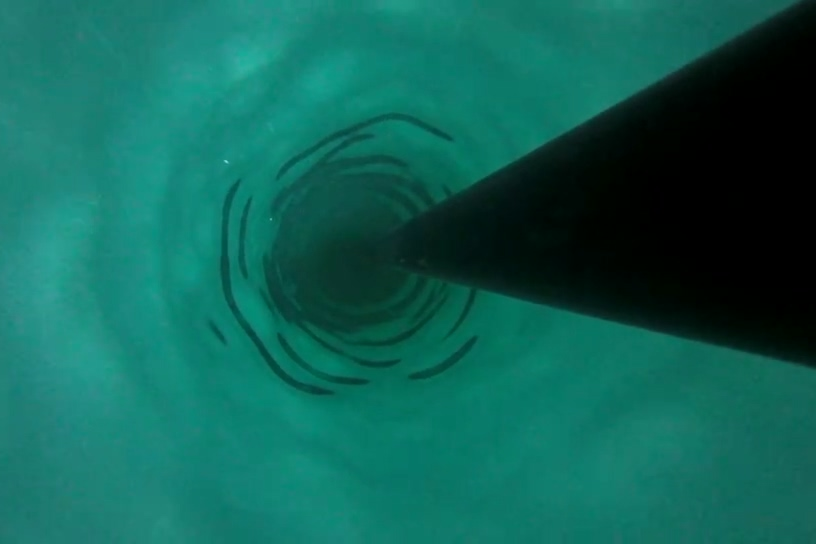
In a landmark milestone for polar scientific research, China has set a new world record for hot water ice drilling, reaching a depth of 3,413 meters during its first experimental deep drilling mission in Antarctica, China’s Ministry of Natural Resources announced on Tuesday. The achievement shatters the previous international benchmark of 2,540 meters, opening new doors for unexplored polar research.
The successful mission was completed on February 5 by China’s 42nd Antarctic Expedition Team, which carried out the test at the Qilin Subglacial Lake, a massive buried Antarctic body of water first named by Chinese researchers in 2022. Located in Princess Elizabeth Land, within the inland ice sheet of East Antarctica, the subglacial lake sits roughly 120 kilometers from China’s Taishan Antarctic research station, making it an accessible yet geologically significant site for deep drilling operations.
With this breakthrough, China now has the proven technical capacity to conduct drilling research across more than 90 percent of the Antarctic ice sheet and the entirety of the Arctic ice sheet, according to official project updates. Hot water ice drilling is widely recognized as a cutting-edge frontier of global Earth science, with core research goals that include unlocking clues about Earth’s ancient environmental shifts, improving the accuracy of future climate change projections, exploring the limits of life in extreme hidden ecosystems, and expanding humanity’s fundamental understanding of polar geoscience.
Compared to traditional mechanical ice drilling methods, hot water drilling technology offers major advantages. It penetrates ice far faster while causing minimal disruption to the ice column and subglacial environment, supports clean, large-diameter drilling operations, and can efficiently reach critical geological interfaces including subglacial lakes, ice shelf bases, and subglacial bedrock. For these reasons, it has become the gold standard for international research into the deep, hidden environments of polar ice sheets.
The 2026 experimental mission was designed primarily to validate the performance of China’s domestically developed deep ice sheet hot water drilling system under extreme Antarctic conditions. By drilling through the full thickness of the ice cover over Qilin Subglacial Lake, the project created a contamination-free access route and lays critical technical groundwork for upcoming research, including future in-situ observations of the subglacial ecosystem and collection of water and lakebed sediment samples.
Targeting an ice sheet over 3,000 meters thick, the mission integrated multiple custom-built pieces of equipment engineered specifically to withstand polar conditions, while solving longstanding key technical challenges: reliable low-temperature operation of machinery, strict prevention of external contamination of the pristine subglacial environment, and precise management of deep hoses and winches at extreme depth.
Officials noted that the successful drilling demonstrated the new system’s efficient, stable, and environmentally sustainable operation. The milestone fills a longstanding gap in China’s polar research capabilities and aligns with the country’s stated commitment to ‘green exploration’ and environmentally responsible polar science practices.