Four astronauts aboard NASA’s groundbreaking Artemis II mission entered their fifth day of lunar exploration Sunday, having already captured unprecedented views of a massive lunar crater never before seen directly by human observers.
As the crew woke to start their day on the 10-day voyage, NASA’s real-time mission dashboard placed the Orion spacecraft roughly 215,000 miles (346,000 kilometers) from Earth and 65,000 miles away from the Moon. The ceremonial wake-up call came from 90-year-old former Apollo 16 astronaut Charlie Duke, who walked on the lunar surface in 1972. In his message, Duke told the crew he had left a photograph of his family on the Moon, reminding them that people across the United States and the globe are rooting for their success, praising them for extending the historic legacy of the Apollo program through the Artemis initiative.
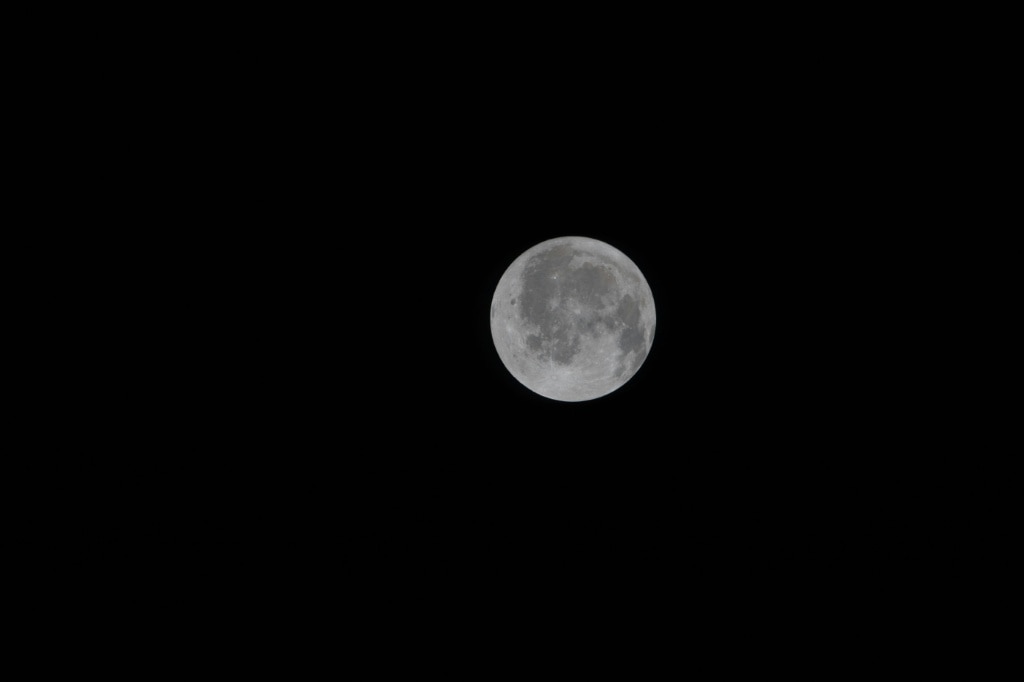
Overnight Saturday into Sunday, NASA released a new image captured by the Artemis II crew showing the Moon from a distance, with the sprawling Orientale basin clearly visible. Space agency officials confirmed this marks the first time humans have ever viewed the entire massive basin with their own eyes. While previous orbital spacecraft have photographed the bullseye-shaped crater, which is often nicknamed the Moon’s “Grand Canyon,” no human mission has ever brought crew close enough to observe it directly. During a live question-and-answer session with Canadian schoolchildren hosted by the Canadian Space Agency, astronaut Christina Koch said the basin was the feature the entire team was most eager to see. “It’s very distinctive and no human eyes previously had seen this crater until today, really, when we were privileged enough to see it,” Koch told the young audience.
The mission’s next major milestone is scheduled to occur between Sunday overnight and Monday, when the Orion capsule will enter the “lunar sphere of influence” — the zone where the Moon’s gravitational pull becomes stronger than Earth’s pull on the spacecraft. If all systems continue to operate as expected, the four-person crew, made up of American astronauts Koch, Reid Wiseman and Victor Glover, plus Canadian astronaut Jeremy Hansen, will break a decades-old space record as they swing around the Moon, becoming the humans that have traveled the farthest distance from Earth in history.
So far, the crew has already checked off key mission objectives, including completing a manual piloting exercise and conducting a full review of their lunar flyby plan, which outlines the surface features they will document and photograph during their pass. In a televised interview with CNN Sunday, NASA chief Jared Isaacman explained that core priority of this mission is to test the Orion spacecraft’s critical systems ahead of future crewed landings. “We’re focusing very much on the ecosystem, the life support system of the spacecraft,” Isaacman said. “This is the first time astronauts have ever flown on this spacecraft before. That’s what we’re most interested in getting data from.”
For the fifth day of the mission, NASA’s schedule calls for comprehensive testing of the crew’s bright orange emergency survival suits, which are worn during launch and re-entry and designed to protect the crew in crisis scenarios including cabin depressurization. The testing protocol will walk the crew through a full sequence of suit operations: donning and pressurizing the garments, running leak tests, simulating seat entry, and evaluating how easily the astronauts can move, eat and drink while wearing the suits.
While the Artemis II crew will not land on the lunar surface during this test flight, their record-breaking distance milestone is expected to be reached over the next 24 hours, when the Orion capsule travels to the far side of the Moon. “They will eclipse that record, and we’re going to learn an awful lot about the spacecraft,” Isaacman noted, adding that the data collected on this mission will be critical for paving the way for future lunar missions, including the Artemis III landing currently scheduled for 2027 and the subsequent Artemis IV landing in 2028.