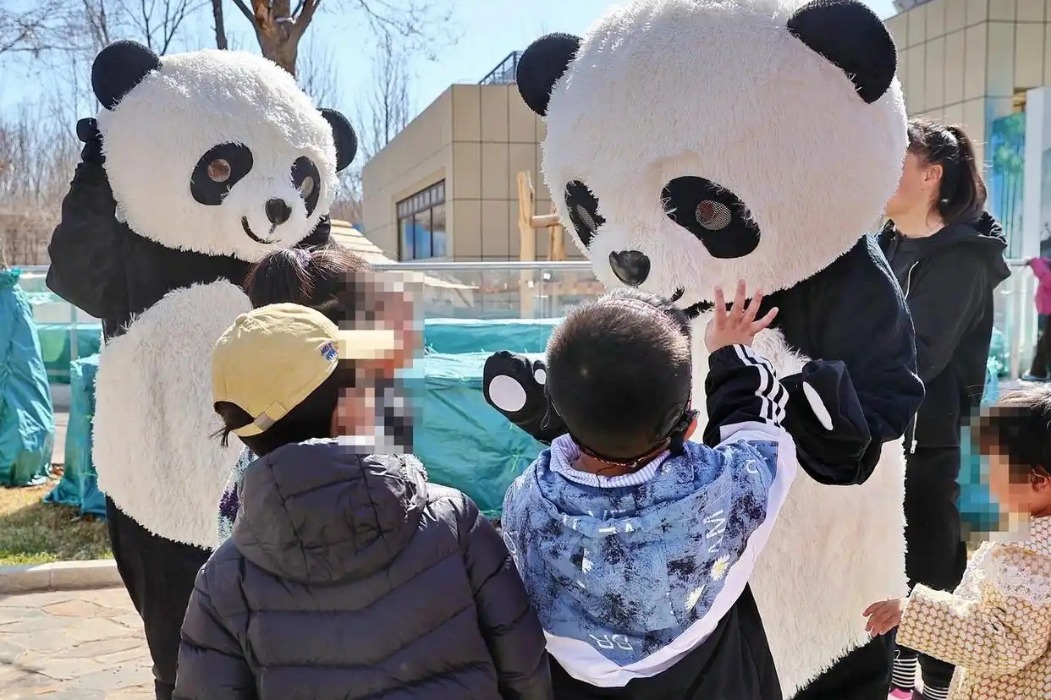
In the coastal city of Qinhuangdao, located in China’s northern Hebei Province, a groundbreaking new initiative is offering a fresh path to healing and development for autistic children. A one-of-a-kind panda-themed therapeutic base has opened its doors at Qinhuangdao Wildlife Park, centered on the idea that gentle, close interactions with giant pandas can create a calming, supportive environment that eases anxiety and nurtures emotional growth.
The base was officially inaugurated on March 27 during a public event titled “Giant Panda Healing • Guarding the Stars”, held just days ahead of the 19th World Autism Awareness Day, marked on April 2. To mark the opening, 133 autistic children joined the event alongside their parents and trained volunteers, getting the chance to explore the park and meet its resident giant pandas firsthand.
Witnesses reported that many children arrived at the venue feeling restless and overstimulated, but gradually softened and relaxed as they moved through the park’s open, green animal zones. At the dedicated panda pavilion, the quiet, playful presence of 6-year-old giant pandas Tao Su and Ya Nan — who were celebrating 100 days of residence in Qinhuangdao — drew quiet, unforced smiles from many of the young participants.
Li Nan, deputy director of the rehabilitation center at Qinhuangdao’s Disabled Persons’ Federation, explained the core logic behind the innovative program. “Interaction with animals can effectively ease anxiety in children with autism and help them build inner security,” she said. “That is the heart of this nature-based healing initiative.”
Unlike traditional indoor rehabilitation training, the new base combines regular open-air visits with structured themed activities, designed to leverage giant pandas’ naturally calm, non-threatening demeanor to create a low-pressure therapeutic space. Ma Zhiguo, president of the Disabled Persons’ Federation of Haigang District, noted that pandas’ steady, nonaggressive behavior perfectly matches the need autistic children have for predictable, safe social interactions. “They can reduce social anxiety and become icebreakers for emotional connection,” Ma added.
For families raising autistic children, the new base fills a critical gap in accessible, supportive care. Song Liping, the mother of 31-year-old autistic adult Li Ruxian, has spent decades navigating the challenges of caring for her son, who did not speak until he turned 4. “Raising a child with autism requires far more patience and energy than most people can imagine,” Song explained, referencing the dual strain of financial pressure and emotional exhaustion that many families face. Since beginning intensive professional rehabilitation for her son in 2014, Song has dedicated herself to autism support work, becoming a volunteer and developing community music therapy programs. Today, her son has progressed from requiring constant full-time care to working as her teaching assistant — a transformation that speaks to the impact of consistent, targeted support.
Liu Demin, Party branch secretary of the Qinhuangdao Psychological Health Association, which provides training and counseling for professionals working with special needs children, outlined the unique benefits of animal and nature-based therapy compared to conventional indoor interventions. “Animals are open and nonjudgmental. Being with them creates a low-pressure social environment and encourages children to initiate interaction,” Liu said. She added that outdoor, multisensory experiences in natural spaces promote healthy sensory development, while open environments inherently help reduce feelings of overwhelm and anxiety. “Observing panda behavior can also extend attention spans, providing strong support for daily rehabilitation,” she noted.
To make the healing program accessible to as many families as possible, Qinhuangdao Wildlife Park has introduced a new preferential access policy: any visitor with a severe disability certificate can bring one family member as a companion for free, eliminating unnecessary financial barriers for participating families. Looking ahead, the base plans to roll out specialized tailored therapy sessions for autistic visitors and expand training for all personnel working with program participants to ensure safe, effective support.
As the opening event drew to a close with a festive animal parade, children wandered freely under the warm spring sun. For these young participants, often referred to as “children of the stars” in China, the quiet encounter with the gentle giant pandas offered moments of uncomplicated, genuine joy — a powerful reminder that every life carries immeasurable value, and that inclusive, innovative support can open new doors for growth and connection.