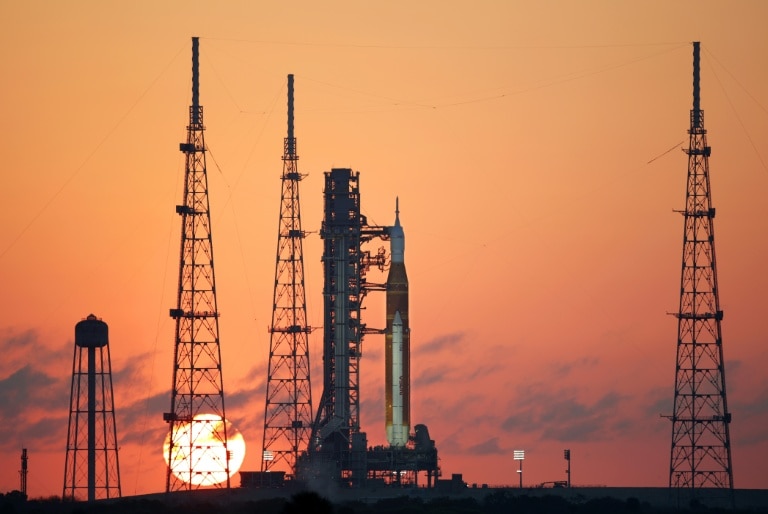
NASA has initiated the critical two-day countdown sequence for its groundbreaking Artemis II mission, marking the agency’s first crewed lunar expedition in over five decades. The monumental launch window opens on Wednesday, April 1st at 6:24 PM EST (2224 GMT) from Kennedy Space Center’s Launch Pad 39B in Florida, where the Space Launch System (SLS) rocket and Orion spacecraft currently stand poised for their historic journey.
Mission officials expressed unwavering confidence in both hardware and crew readiness during Monday’s technical briefing. ‘The vehicle is ready, the system is ready. The crew is ready,’ declared Amit Kshatriya, NASA’s associate administrator, emphasizing that this mission represents the foundation for future lunar exploration campaigns, including established plans for permanent lunar base construction.
The four-member international crew—NASA astronauts Reid Wiseman, Victor Glover, and Christina Koch alongside Canadian Space Agency astronaut Jeremy Hansen—have entered pre-launch quarantine protocols. In a touching pre-mission tradition, the astronauts were scheduled to share a final family dinner at a Florida beach residence before embarking on their celestial voyage.
This mission achieves multiple historic milestones: featuring the first woman, first person of color, and first non-American to participate in a lunar mission. The launch also represents the inaugural crewed flight test of NASA’s next-generation SLS rocket system, designed to enable sustained human presence on the Moon.
Despite previous technical challenges that delayed the originally planned February launch, including necessary rollbacks to the Vehicle Assembly Building for analysis and repairs, mission directors now report all systems operating optimally. Launch director Charlie Blackwell-Thompson affirmed: ‘We’ll fly when this hardware is ready. But certainly all indications are right now we are in excellent, excellent shape.’
Weather conditions appear favorable with an 80% probability of acceptable launch conditions, though mission teams continue monitoring potential cloud coverage and surface wind constraints. Space weather conditions are also under continuous observation as the agency prepares to make spaceflight history.