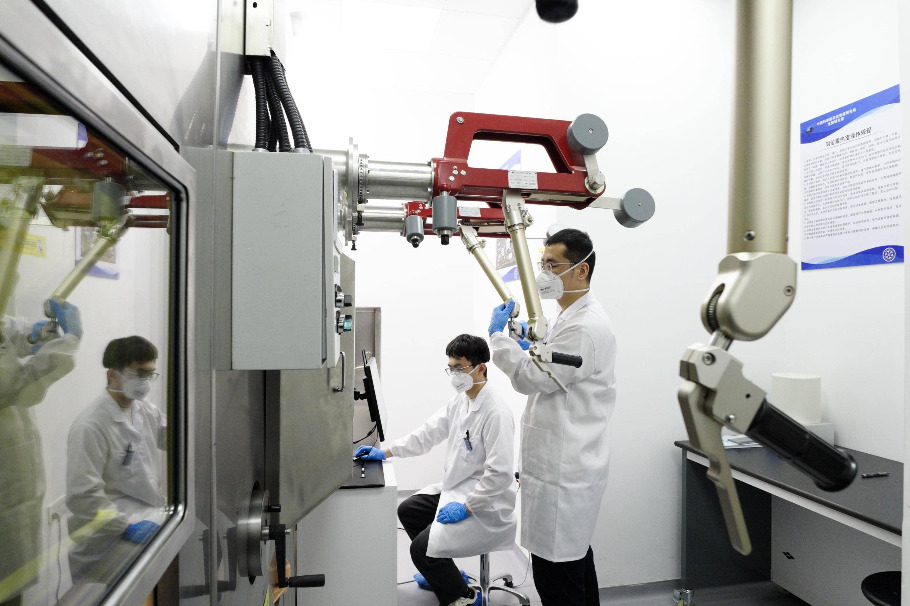
China has made a revolutionary advancement in cancer treatment through the successful mass production of medical alpha isotopes at the China Spallation Neutron Source facility in Dongguan. This breakthrough ends years of import dependency and positions China to treat over one million cancer patients annually by 2031.
Alpha isotopes represent a transformative approach to cancer therapy, often described as ‘nuclear warheads against cancer’ due to their unique properties. These particles deliver high-energy radiation with extremely short range, enabling precise destruction of cancer cells while minimizing damage to surrounding healthy tissue. Their clinical value is particularly significant for advanced-stage tumors where precision is critical.
Professor Wang Sheng, director of the Spallation Neutron Source Science Center, emphasized the urgency of this development: ‘China diagnoses nearly 5 million new cancer cases annually, representing one-quarter of global cases with mortality rates exceeding 50%. This technology addresses a critical healthcare challenge.’
The therapeutic mechanism involves alpha isotopes penetrating cancer cells and emitting radiation that breaks both strands of DNA, causing irreversible cellular damage. Additionally, they produce a ‘bystander effect’ where signaling molecules from destroyed cancer cells trigger the death of neighboring malignant cells not directly exposed to radiation.
The technical breakthrough came through innovative application of the spallation neutron facility. Researchers utilized excess beam current from the high-energy linear accelerator to irradiate stacked thorium targets, then employed a proprietary separation and purification process to extract three key isotopes: radium-223, actinium-225, and lead-212. These have demonstrated exceptional efficacy against prostate cancer and neuroendocrine tumors.
Professor Dai Xiongxin, leading the industrialization project, highlighted strategic advantages: ‘Unlike traditional nuclear reactors, our method doesn’t require neutron irradiation, eliminating proliferation risks associated with highly enriched uranium. It offers flexible production, broader raw material access, and significantly lower costs.’
The project reached a milestone with a recent cooperation agreement between the Spallation Neutron Source Science Center and China Isotope & Radiation Corporation. This partnership accelerates the transition from laboratory research to clinical application of domestically developed alpha radiopharmaceuticals.
A dedicated production line currently under development will support large-scale clinical applications. The facility’s planned capacity will supply raw materials for approximately one million patient doses annually, dramatically reducing treatment costs and improving accessibility. The short half-life of these isotopes necessitates local production and distribution, potentially establishing Guangdong as a comprehensive hub for targeted alpha therapy covering production, manufacturing, and distribution.