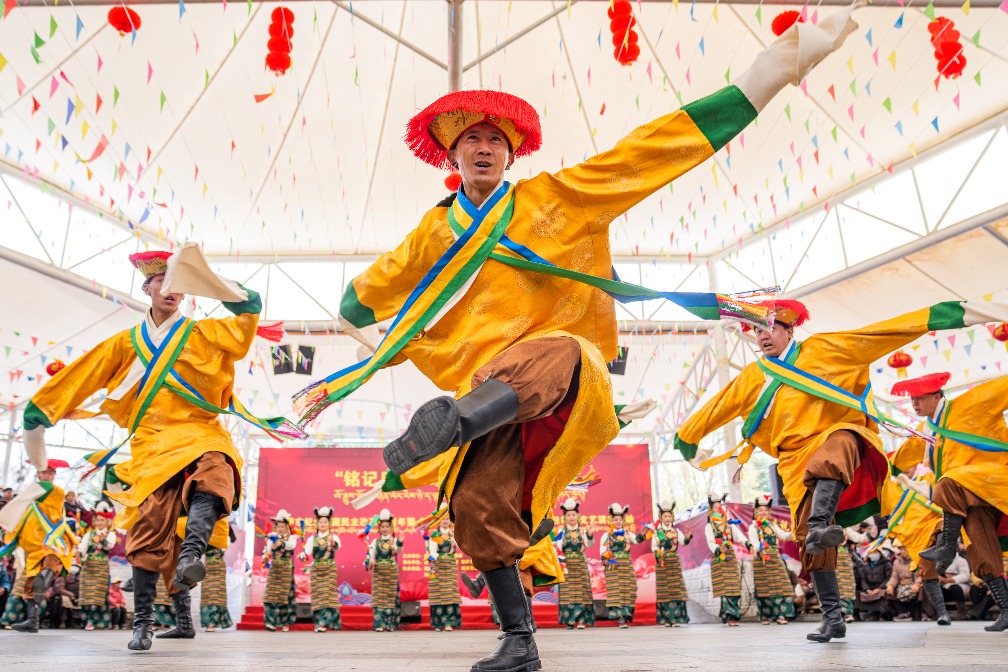
Lhasa witnessed a solemn flag-raising ceremony at Potala Palace Square on Saturday as the Xizang Autonomous Region commemorated its 18th official Serfs Emancipation Day. The March 28 observance, established in 2009, recognizes the historic democratic reforms implemented in 1959 that abolished feudal serfdom throughout the region.
The ceremony attracted participants from diverse social backgrounds who gathered to reflect on Xizang’s transformative journey. Regional government chairman Karma Tsetan delivered a televised address on Friday evening, emphasizing the significance of the 67th anniversary of emancipation for approximately one million former serfs.
Karma Tsetan characterized the 1959 reforms as a watershed moment that eradicated what he described as ‘dark, cruel, barbaric, and backward theocratic feudal serfdom.’ He contrasted contemporary conditions with historical circumstances, noting that current life expectancy has dramatically increased from 35.5 years prior to 1959 to 72.5 years today. The chairman also highlighted that childhood mortality rates have substantially decreased from approximately 40% during the pre-reform era.
‘Present-day Xizang residents experience comprehensive human rights protections that stand in stark opposition to the historical reality of serfs living in perpetual fear and dignity deprivation,’ Karma Tsetan stated during his address.
Seventy-one-year-old Lhasa resident Tsewang, who learned about pre-reform conditions through elder accounts, acknowledged the region’s developmental progress. ‘Although I never personally endured the sufferings of old Xizang,’ he remarked, ‘the continuous improvement of living standards demonstrates how contemporary happiness emerges from hard-won achievements.’
Various commemorative activities have been organized across Xizang to mark the anniversary, fostering public reflection on the region’s socioeconomic evolution and current prosperity.