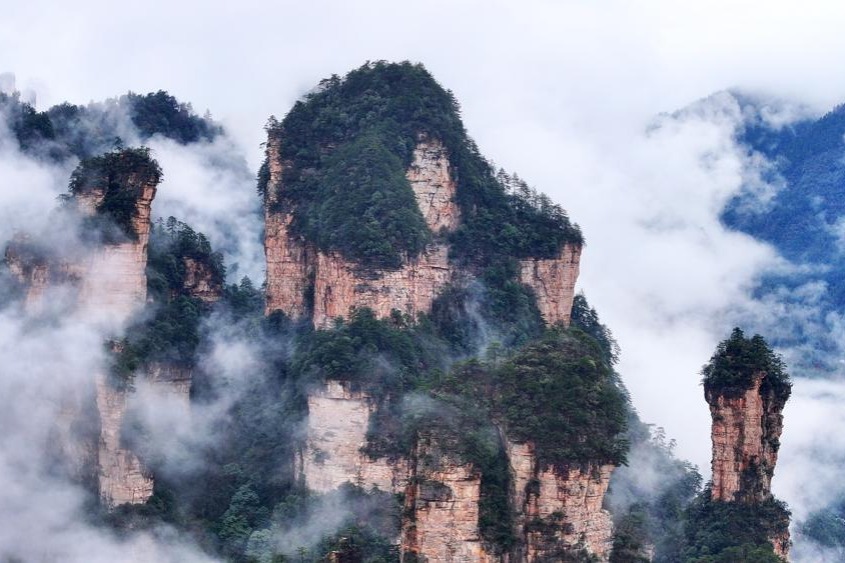
Zhangjiajie National Forest Park in China’s Hunan province has been graced by a spectacular meteorological phenomenon this March, as recurring cloud formations have transformed the landscape into an ethereal masterpiece. Following seasonal rainfall, the park’s iconic quartz-sandstone peaks became enveloped in a dramatic sea of clouds on Thursday, creating a visual spectacle that has drawn comparisons to classical Chinese ink paintings.
The geological marvel occurred as moisture from recent spring rains interacted with atmospheric conditions, causing dense cloud formations to rise gently from the valleys and swirl around the towering rock formations. This natural occurrence has created the illusion of ancient peaks floating amidst a cotton-like ocean, with misty tendrils wrapping around the stone pillars like delicate silk ribbons.
This spring has proven particularly remarkable for cloud formations, with frequent occurrences since early March enhancing the park’s already stunning vistas. The phenomenon has significantly boosted tourism during what is typically a transitional season, attracting photographers, nature enthusiasts, and international visitors eager to witness the surreal landscape. The cloud sea not only highlights the unique geological features of Zhangjiajie, a UNESCO Global Geopark, but also demonstrates the fascinating interplay between meteorology and topography in creating natural wonders.
The spectacular views have generated substantial attention on social media platforms, with professional and amateur photographers alike capturing the transient beauty of the clouds interacting with the distinctive karst formations. Park officials note that such extensive cloud seas typically occur during seasonal transitions when temperature differentials between the valley floor and mountain peaks create ideal atmospheric conditions.