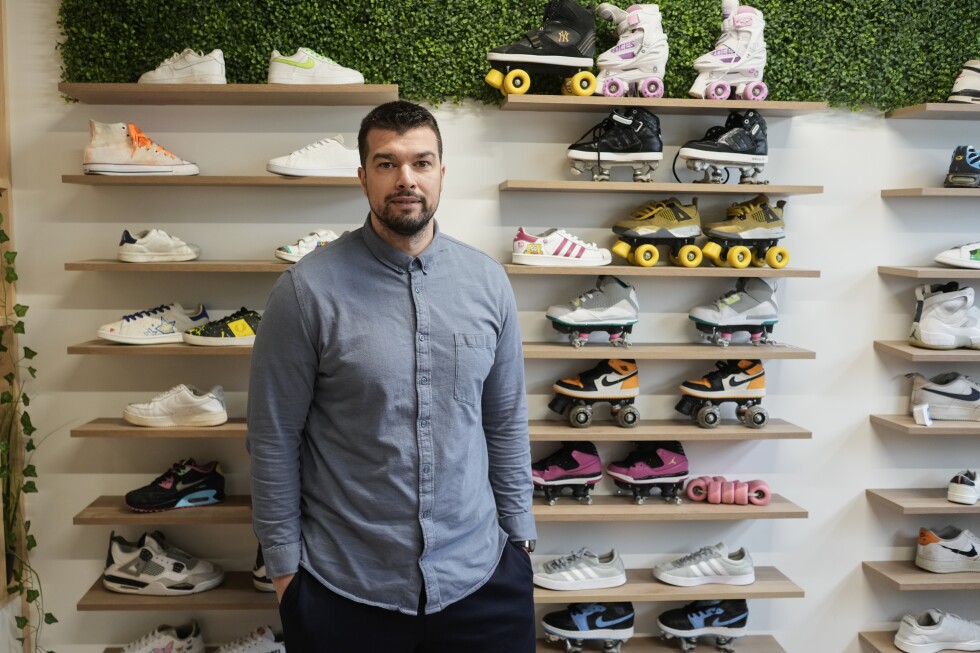
In a workshop east of Paris, an innovative nonprofit organization is tackling fashion waste through an unprecedented sneaker recycling initiative. SneakCœurZ processes hundreds of used athletic shoes weekly, employing a meticulous inspection system to determine which pairs can be salvaged and returned to circulation.
The organization, which collected 30,000 pairs of used sneakers last year alone, has developed industrial-scale processes for sorting, cleaning, and redistributing footwear. According to Director General Mohamed Boukhatem, their operation represents the only project of this magnitude within the sneaker sector, combining comprehensive collection networks with advanced refurbishment techniques.
This initiative addresses a critical environmental challenge: the textile industry ranks among the world’s most polluting sectors, accounting for up to 8% of global greenhouse gas emissions according to United Nations data. The European Parliament has identified textiles as the third-largest source of water degradation and land use within the European Union.
France’s staggering consumption patterns underscore the urgency—Refashion, the government-approved eco-organization, reports 259 million pairs of shoes sold nationally in 2024, with only approximately one-third of used textiles and footwear being properly collected for recycling.
At the Champs-sur-Marne workshop, technicians employ rigorous evaluation criteria. “Structural integrity determines refurbishment potential,” explained workshop manager Paul Defawes Abadie. “While superficial elements like Velcro straps or laces present no obstacle, the condition of outsoles and structural materials proves decisive.”
Approved sneakers undergo comprehensive restoration including deep cleaning, disinfection, and specialized UV whitening treatments. Beyond environmental benefits, the program has already redistributed over 7,000 pairs to disadvantaged communities while creating 19 sustainable jobs.
France complements such grassroots efforts with legislative action. The 2020 anti-waste law mandates that unsold nonfood goods must be reused, donated, or recycled rather than destroyed. Recent measures include a state-backed repair subsidy for clothing and footwear, while proposed legislation targeting the textile industry’s environmental impact advances through parliamentary processes.