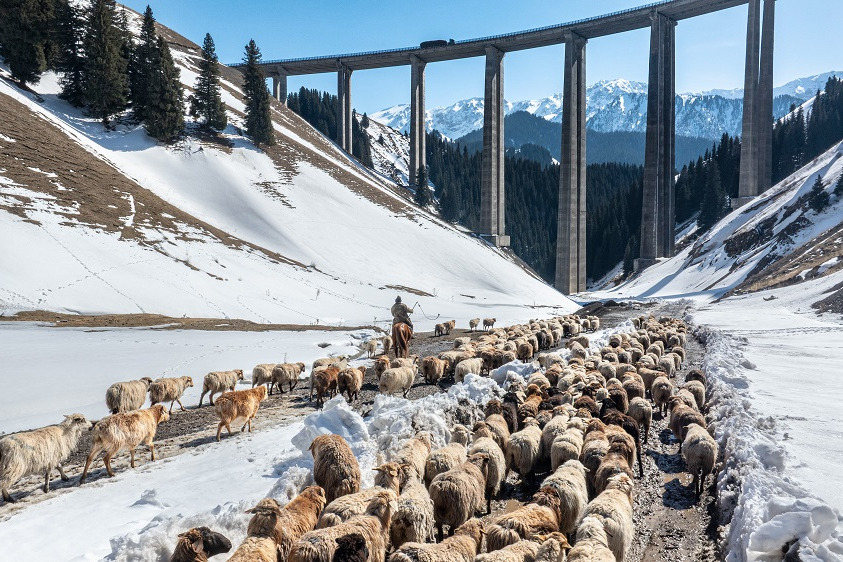
In China’s northwestern Xinjiang Uygur Autonomous Region, traditional pastoral migration has entered its spring phase with enhanced governmental assistance. As winter recedes and temperatures rise in Huocheng county of the Ili Kazak Autonomous Prefecture, nearly 400 herding families have initiated their seasonal movement from winter grazing lands to spring pastures.
The annual migration, a centuries-old practice among the region’s pastoral communities, now benefits from structured support systems designed to ensure both human and animal welfare. Local authorities from animal husbandry departments and township governments have deployed staff to accompany herders throughout the journey, providing essential services and monitoring the transition.
Strategic planning has resulted in the establishment of two dedicated transit points along migration routes. These facilities offer complimentary assistance including emergency medical care for herders and nutritional support for livestock. The comprehensive approach addresses both immediate needs during the movement and broader concerns about the sustainability of traditional pastoralism in modern times.
This year’s migration involves the relocation of approximately 110,000 animals across Huocheng county’s diverse terrain. The operation, which demonstrates the coexistence of cultural traditions and contemporary governance, is scheduled for completion by March’s end. The coordinated effort reflects broader regional initiatives to support nomadic lifestyles while implementing modern animal husbandry practices and ecological conservation measures.