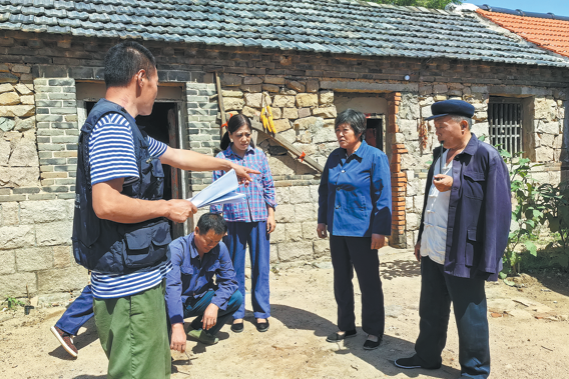
In an extraordinary display of grassroots creativity, the remote village of Beiliangjia in Qingdao’s West Coast New Area has captured national attention through an innovative micro-drama project. What began as a simple initiative to promote local agricultural products has evolved into a cultural phenomenon, demonstrating the powerful convergence of rural life and digital storytelling.
The project originated when director Ding Zhaoting, leveraging his background in social media development and agricultural livestream sales, recognized the limitations of conventional marketing approaches in a community predominantly inhabited by elderly residents. Instead of traditional promotional methods, he conceived a revolutionary approach: enlisting villagers themselves as actors to portray authentic stories from their daily lives.
With minimal equipment—just a single smartphone for both filming and editing—the production team assembled over twenty local residents with no prior acting experience. The cast included a veteran hairdresser with thirty years of service, a 58-year-old shopkeeper, and a 64-year-old farmer who continues to work the fields. Their series, titled ‘Hua Kai Shi Shang’ (Blooming on the Rocks), depicts the journey of a young woman who marries into a struggling household with three unmarried brothers, gradually guiding the family toward prosperity through resilience and ingenuity.
The production process demanded extraordinary dedication from the amateur cast. Participants balanced their agricultural responsibilities with rigorous filming schedules, often working late into the night to memorize lines and perfect scenes. Zhao Meixia, one of the senior actors, recounted spending until 3-4 AM practicing dialogue and enduring over fifty takes for a single scene, guided by the director’s patient encouragement.
The series achieved remarkable viral success upon its release, accumulating 250 million views within its first two weeks on Chinese social media platforms and eventually reaching 370 million total views. This unexpected popularity generated tangible economic benefits, with the village’s collective income increasing by approximately 500,000 yuan ($72,000) between September and December. The heightened visibility also stimulated demand for local specialties including chestnuts and wild mushrooms, leading to the establishment of a new vermicelli processing workshop with substantial orders.
This initiative represents part of a broader regional development strategy in the Qingdao West Coast New Area, which has emerged as a significant hub for creative production hosting approximately 1,200 film and television companies. The local government has implemented supportive policies encouraging micro-dramas as instruments of rural revitalization, combining agricultural promotion with cultural storytelling.
The Beiliangjia model has proven so successful that it has inspired replication across multiple villages, with six additional micro-dramas already produced and a seventh currently in development. This grassroots movement demonstrates how digital technology and authentic storytelling can transform rural communities while preserving their unique cultural identity.