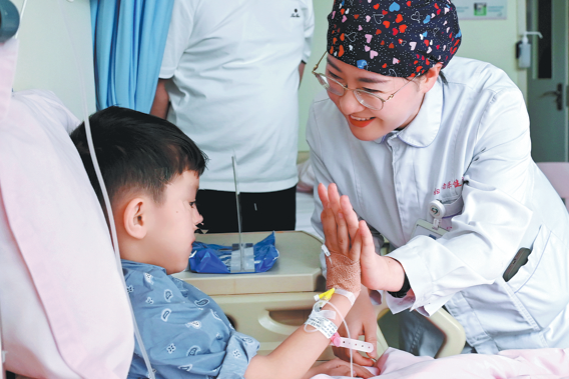
In a landmark demonstration of international medical cooperation, nine Tajik children with severe congenital heart conditions have received successful surgical treatment at Qingdao University’s Women and Children’s Hospital in China’s Shandong province. The medical mission, conducted between March 13-23, 2026, represents growing healthcare collaboration between China and Tajikistan within the Shanghai Cooperation Organization framework.
The young patients, ranging from toddlers to early teenagers, presented with complex cardiac abnormalities including tetralogy of Fallot and severe aortic stenosis. Medical teams employed both innovative minimally invasive techniques and traditional surgical approaches to address these life-threatening conditions. Notably, one interventional procedure led by renowned cardiologist Pan Silin was completed in a remarkable 13 minutes for a six-year-old girl.
Hospital director Chen Rui reported all procedures proceeded without complications, with patients expected to transition to regular wards for continued recovery. The surgical team particularly impressed their Tajik counterpart—a cardiac surgeon accompanying the children—with a technique requiring only a 1.2-centimeter incision under the right armpit, prompting discussions about long-term medical partnership.
Beyond cardiac care, Chinese physicians demonstrated comprehensive diagnostic excellence when preoperative examinations revealed an unrelated hepatic cyst caused by echinococcosis in one child. Senior surgeon Zhang Jian successfully performed a liver-preserving resection, scheduling cardiac surgery for six months later.
The humanitarian initiative originated from the sister-city relationship between Qingdao and Dushanbe, with hospital officials crediting its success to multidisciplinary preparation and individualized treatment plans. Medical staff enhanced the patient experience by learning basic Tajik phrases and providing culturally sensitive care, including cartoon screenings and daily parental visits to the cardiac ICU.
Yan Hui of the China-Tajikistan Medical Diagnosis and Treatment Center noted that many Tajik children face treatment delays due to limited medical resources and financial constraints. Following a similar 2025 program in Xinjiang, demand for Chinese medical treatment among Tajik families has increased significantly, with phrases like ‘thank you, Chinese doctor’ becoming common expressions of gratitude.