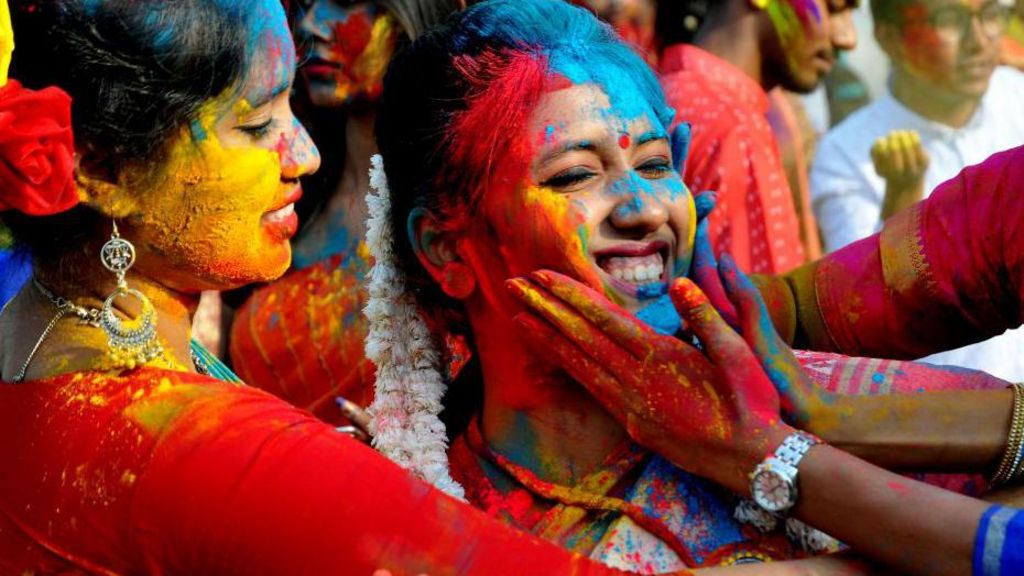
Across India and numerous countries worldwide, millions have enthusiastically participated in the vibrant Holi festival, renowned as the spectacular festival of colors. This ancient Hindu celebration, deeply rooted in mythological traditions, symbolizes the eternal victory of righteousness over malevolence while simultaneously marking nature’s seasonal transition from winter to spring.
The festivities incorporate rich religious rituals and cultural practices. Participants engage in prayer ceremonies before playfully applying vivid colored powders in radiant shades of red, pink, yellow, and green upon family members and friends. Streets transform into dynamic canvases of chromatic celebration as communities collectively engage in this joyful tradition. The culinary aspect features special festive treats including gujiya, a delicately fried pastry filled with coconut and dried fruits, and thandai, a nourishing milk-based beverage enhanced with nuts and spices.
Holi’s origins trace back to the legendary narrative of Holika, a demonic figure who attempted to murder her devout nephew Prahlad. According to sacred texts, divine intervention protected Prahlad from fiery destruction while Holika perished in the flames. This mythology inspires the ritual of lighting ceremonial bonfires on Holi’s eve, representing the purification of negative forces and the ascendancy of goodness.
The festival additionally honors the celestial romance between deities Radha and Krishna, particularly in northern regions like Mathura and Vrindavan where Krishna spent his childhood. These locations host especially elaborate celebrations featuring traditional music, devotional dancing, and exuberant color play.
Beyond India’s borders, Nepal’s majority-Hindu population observes Holi with equal fervor. The Indian diaspora has also introduced these traditions globally, with documented celebrations occurring in nations including Kenya. Notably, the festival transcends religious boundaries, with people of various faiths frequently joining the festivities. Even Hindu widows, traditionally excluded from certain celebrations, now participate in special events where they commemorate with flower petals and colors.
Tourists increasingly seek authentic Holi experiences, contributing to a thriving market for colored powders, water pistols, and celebratory accessories that appears in shops days before the festival. Children enthusiastically engage using pressurized water guns and color-filled balloons, adding to the event’s playful atmosphere through aquatic chromatic warfare.