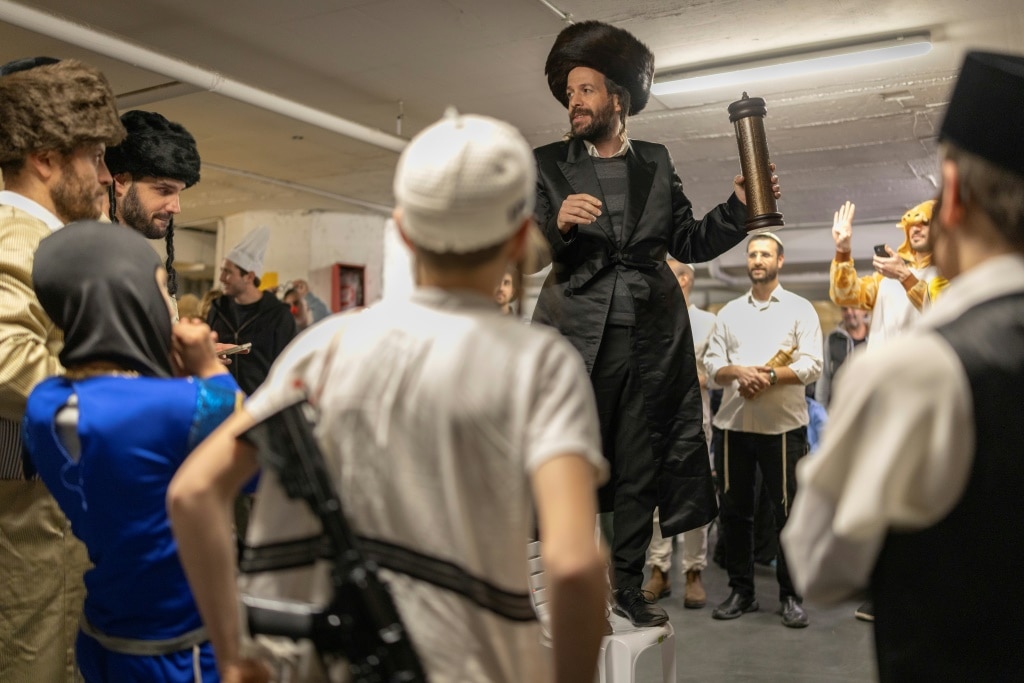
Amidst the wail of air raid sirens signaling incoming Iranian missiles, an extraordinary scene unfolded deep beneath Tel Aviv’s streets on Monday evening. As the Jewish holiday of Purim commenced, hundreds of young Israelis descended four floors underground into a converted parking garage shelter, defying both the military ban on public gatherings and the ongoing regional tensions through determined celebration.
The coastal city’s residents, who had been forced to seek protection just as the festive period began, transformed a mall’s basement parking facility into an impromptu celebration space. Participants arrived in full Purim costume—a traditional aspect of the holiday that commemorates the Jewish people’s deliverance from Persian persecution centuries ago. The gathering featured an eclectic mix of characters, from cowboys and Peter Pan to a Pikachu and a flight attendant whose sign read “Tel Aviv-Tehran, status: boarding.”
At the heart of the celebration stood a rabbi reciting the Megillah, the biblical passage from the Book of Esther traditionally read during Purim. Each mention of the story’s villain, Haman, prompted the customary booing and noise-making from attendees, who then transitioned to drinking and dancing to pop music despite the highly unusual setting.
The underground location, officially designated as a shelter during projectile attacks, had been emptied of vehicles and instead contained numerous tents where some residents had chosen to take up semi-permanent residence to avoid repeated nighttime dashes to safety during sirens.
For 28-year-old Maxim Green, who learned about the gathering through his synagogue’s WhatsApp group, the parallel between the ancient Purim narrative and current events was striking. “It’s really crazy that it’s happening at this time, this war,” he observed. “Because it really does have some similarities with the Purim story. You have an evil regime who wants to topple the Jewish people.”
The celebration represented a complex intersection of tradition, current events, and human resilience. While some rabbis opted for online Megillah readings to comply with military restrictions, others found ways to maintain both religious observance and community spirit in adapted formats.
Anna Shilanski, 32, who had established a tea station for fellow shelter residents, expressed appreciation for the gathering despite initial surprise at the crowd size. “I’m really happy that people have a place to do this,” she remarked, noting that feeding people during stressful times comes naturally to many.
The event demonstrated the community’s adaptation to ongoing security challenges, with attendees like 26-year-old tech worker Ethan Cohen participating after spending part of his day volunteering to clean debris from missile impact sites. For older residents like 70-year-old Anat Shamir, sleeping on the opposite side of the parking lot, the discomfort was a necessary price for security, expressing confidence in Israel’s leadership and military response capabilities.
As the evening progressed, some revelers eventually sought fresh air above ground, emerging from the basement shelter into Tel Aviv’s quiet streets, carrying with them the dual reality of celebration and conflict that has come to characterize daily life during this period.