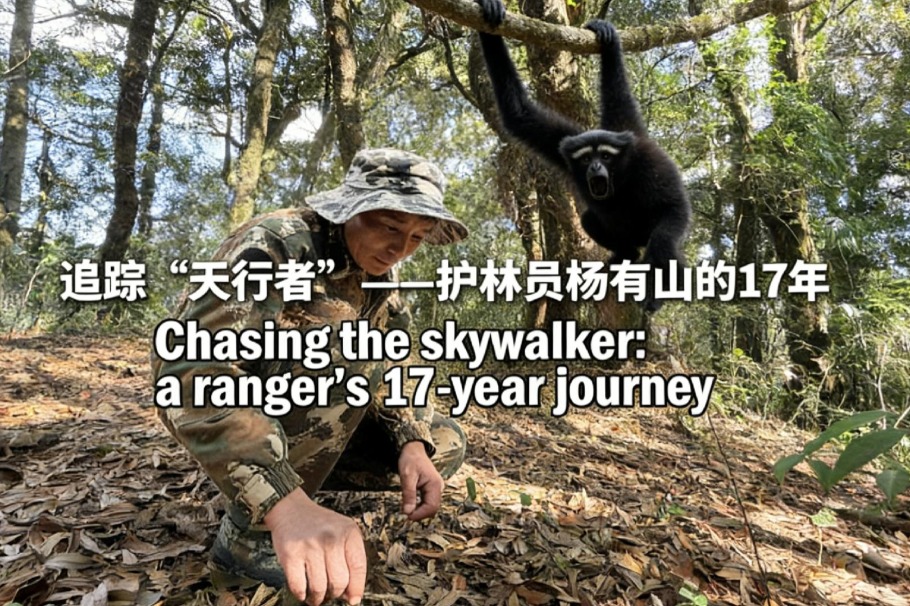
Deep within the mist-shrouded canopy of Southwest China’s Gaoligong Mountains, a solitary figure moves with purposeful familiarity. For nearly two decades, ranger Yang Youshan has dedicated his life to monitoring one of Earth’s most critically endangered primates: the Skywalker hoolock gibbon.
With fewer than 200 individuals remaining in China’s wild forests, each monthly expedition becomes a vital chapter in conservation history. Yang’s five-day treks follow meticulously established patterns, tracking an aging gibbon couple through their territorial domain. His detailed records document numbered food trees and nocturnal sleeping sites, creating an intimate ecological map of their existence.
The significance of this work traces back to 2005 when a colleague captured the first definitive photographic evidence of this elusive species in the same mountains. Twelve years later, Chinese scientists achieved taxonomic history by officially naming it the Skywalker hoolock gibbon—the first gibbon species identified by Chinese researchers in a century.
This enduring narrative transcends conventional wildlife monitoring, representing an extraordinary bond between human dedication and natural preservation. Through seasonal changes and ecological challenges, one man’s persistent commitment has become synonymous with the survival hopes of an entire species.