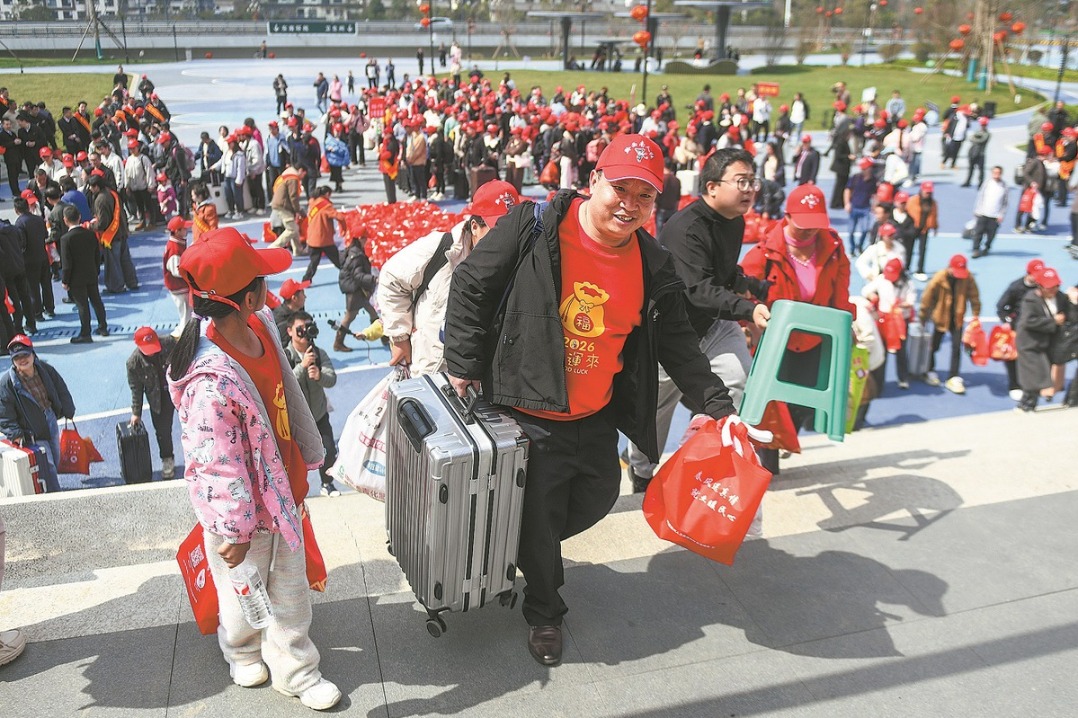
In a massive nationwide effort to facilitate post-Spring Festival workforce mobilization, Chinese authorities are operating complimentary trains and dedicated buses to transport migrant laborers back to their workplaces. This annual migration sees millions of workers transitioning from central and western regions to industrial hubs along the eastern seaboard following the Lunar New Year celebrations.
The Qianxinan Bouyei and Miao Autonomous Prefecture in Guizhou province has emerged as a focal point of this initiative, with human resources departments coordinating specialized rail services offering approximately 500 seats per train. These services connect workers to major manufacturing centers including Foshan, Hangzhou, and Guangzhou through February 28th.
One beneficiary, surnamed Yang, described the streamlined application process: “After my village issued the notice, I simply scanned a QR code to register and received confirmation the following day.” This digital approach has significantly reduced the administrative burden on workers traditionally faced with complex multi-transfer journeys carrying heavy luggage.
Wang Wanmin, Director of the prefecture’s Human Resources and Social Security Bureau, emphasized the program’s scale: “We will continue operating special trains and buses to transport 20,000 fellow townspeople to jobs, further stabilizing employment and boosting incomes.”
Parallel initiatives are underway across China’s transportation network. The China Railway Chengdu Group plans to operate 32 post-festival special trains serving approximately 18,000 passengers through March 6th, primarily from labor-exporting regions like Sichuan and Guizhou.
The coordination extends beyond transportation to employment matching. A recent special train from Xi’an to Suzhou carried workers pre-matched with positions in high-end intelligent manufacturing, electronic information, and precision machinery industries. Upon arrival at Suzhou North Railway Station, local authorities provided dedicated shuttle vehicles directly to factory dormitories.
Guangdong province has implemented additional flexible solutions, introducing point-to-point bus routes from labor-exporting areas. Between February 19-25, workers could scan codes to arrange transportation from Hunan, Jiangxi, and Hubei provinces directly to Guangzhou. Huizhou city has established return-to-work shuttle services at major transport hubs, expected to serve over 3,000 workers with last-mile connections.