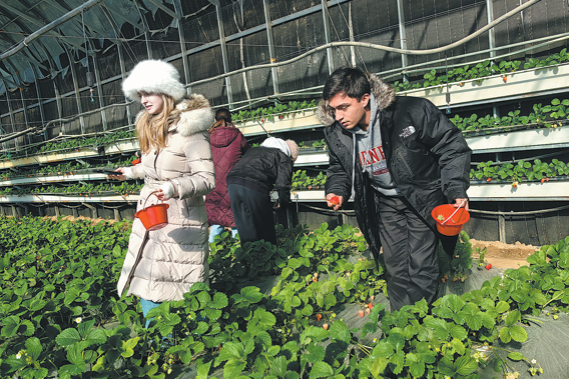
A transformative educational journey through China’s heartlands has provided Cornell University students with unprecedented insights into the nation’s innovative agricultural practices and rural development strategies. The two-week immersive program, spanning Beijing, Hebei, and Sichuan provinces, offered participants firsthand exposure to China’s distinctive approach to rural revitalization and community-based farming systems.
During their January expedition, the agricultural sciences students experienced authentic rural living by staying with local families in Sanggang village, situated within the mountainous terrain of Hebei’s Yixian county. This residential component enabled deep cultural exchange as students shared meals, observed farming techniques, and conducted interviews with community members.
Abbie Jobe, a senior agricultural sciences major from New York with Gambian heritage, discovered profound differences in agricultural philosophy between Chinese and American approaches. “The real essence of rural livelihood here involves taking what you know and helping your neighbors grow,” Jobe observed, contrasting China’s collectivist model with what she characterized as more individualistic practices in the US.
The program featured academic components led by Professor Ye Jingzhong from China Agricultural University, whose three decades of research in Yixian county has yielded significant developments in rural infrastructure and market systems. His team pioneered the concept of “nested markets” after 2010, creating direct connections between urban consumers and smallholder farmers—an innovative approach that later gained national recognition as an early model of consumption-based poverty alleviation.
Dallas Selle, a master’s student in global development, noted the foundational importance of land reform in China’s rural development strategy. “Infrastructure created the basis for everything else, including culture, nested markets, and long-term development,” she observed, highlighting China’s distinctive emphasis on elevating entire communities collectively rather than focusing on individual advancement.
The experience provided comparative perspectives on global development challenges. Gio Rodriguez, a senior global development student, examined rural labor migration patterns and discovered surprising differences in how Chinese households manage gender dynamics during extended work-related separations compared to practices in Latin America.
For Indonesian student Nor Anisa, the participatory methodologies witnessed in Sanggang village offered practical approaches that could potentially be adapted to development challenges in her home country, demonstrating the program’s broader applicability beyond China’s borders.
The Cornell delegation’s immersion in China’s agricultural landscape provided not only academic enrichment but also fostered cross-cultural understanding and revealed innovative solutions to universal rural development challenges that transcend national boundaries.