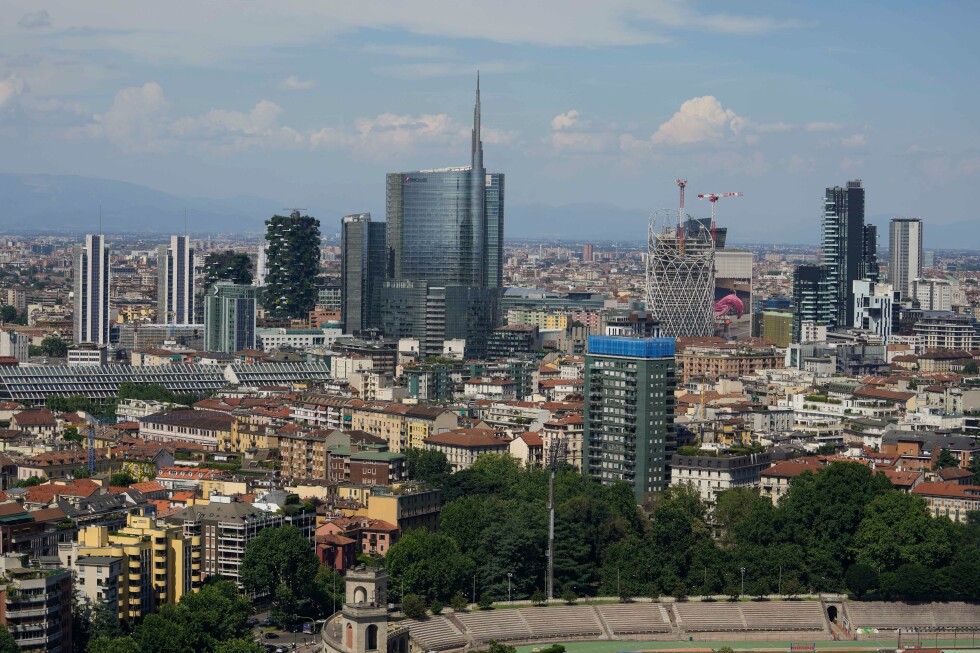
Milan has strategically leveraged its hosting of the Milan Cortina Winter Games to cement its status as a global metropolis, adding ‘Olympic city’ to its established identities as Italy’s fashion and financial capital. This achievement represents the culmination of two decades of transformative urban development that has reshaped the city’s skyline while stimulating unprecedented investment, tourism, and cultural vitality.
The Olympic legacy manifests in both tangible infrastructure and intangible prestige. Unlike traditional Games that emphasize massive construction, Milan adopted a distributed model across seven existing venues spanning hundreds of kilometers. The city inherits the state-of-the-art Santgiulia arena—destined for concerts, exhibitions, and sporting events—while the Olympic Village will address critical housing needs by transforming into accommodation for 1,700 students in a city grappling with affordability challenges amid its 10 universities.
Preliminary data from Bocconi University’s ongoing IOC-commissioned study reveals approximately €4 billion in Games-related investments, encompassing sports facilities, transportation upgrades (roads, metro access, railways, ski lifts), energy infrastructure, and administrative costs. According to Assolombarda business association, Milan specifically invested €735 million to host 90 indoor ice events and the opening ceremony at San Siro, with visitors projected to spend around €1 billion. The Olympics are forecast to boost Milan’s 2026 economic growth by 0.6 percentage points to 1.7%, accelerating industrial output throughout the region.
This Olympic chapter continues Milan’s remarkable transformation that began in the early 2000s, shifting from a provincial industrial center to an international destination. The CityLife district emerged with iconic skyscrapers by starchitects Zaha Hadid, Daniel Libeskind, and Arata Isozaki, while Porta Nuova development introduced the 218-meter UniCredit Tower. Expo 2015 served as a pivotal catalyst, drawing 22 million visitors over six months and triggering sustained tourism growth—rising 6.5% to 9.6 million visitors in 2025.
Beyond tourism, Expo sparked a €3 billion investment converting the former site into MIND, a science and technology hub. The city has since tripled its five-star hotel capacity, added two subway lines, and opened numerous cultural institutions including Fondazione Prada, MUDEC, and Pirelli HangarBicocca.
However, rapid development has fueled criticism from housing activists who argue that mega-events and luxury developments prioritize wealthy interests, driving real estate prices beyond reach for many workers. They demand policies addressing 80,000 vacant residences while increasing subsidized housing options.
The Olympic Village has accelerated regeneration of the southern Porta Romana railyard, adjacent to major former industrial sites. This 20-hectare project will deliver 100,000 square meters of housing—approximately half designated as social housing under 2019 regulations—along with extensive parks and public spaces. The area neighbors Fondazione Prada and emerging fashion hubs hosting Bottega Veneta, Moncler, and upcoming OTB headquarters.
Sporting legacy extends beyond infrastructure, with Italy’s record 30 medals expected to reignite winter sports participation. Olympic organizers are collaborating with companies to promote daily physical activity—an initiative carried over from Paris 2024. Milan’s convention operator has committed to maintaining temporary ice facilities while studying permanent rink options, capitalizing on renewed enthusiasm for ice sports.
As Professor Dino Ruta of Bocconi University notes, ‘Milan is increasingly creating a distinctive brand able to attract an international audience.’ The Games have provided both global visibility and concrete mechanisms for urban improvement, though balancing growth with social equity remains an ongoing challenge for Italy’s rising metropolis.