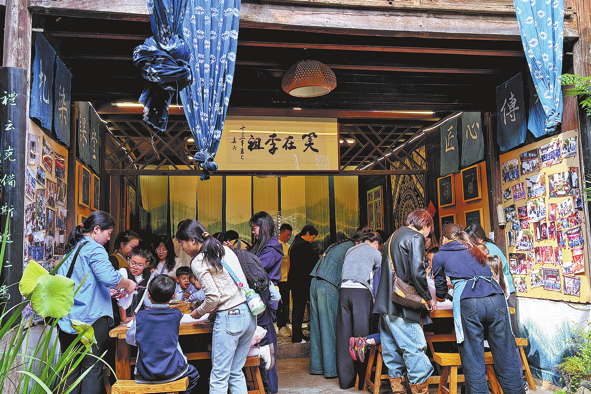
In the quiet hills of Lizu village, Zhejiang province, a cultural renaissance is unfolding through the vibrant blues of an ancient craft. Designer Lou Shamoshuang, 34, has transformed a 400-year-old dyeing technique into a thriving sustainable enterprise that bridges tradition and modernity while revitalizing rural communities.
The journey began in 2018 when Lou discovered a century-old dye workshop in Dali, Yunnan, on the verge of permanent closure. Moved by the artisans’ resignation that their craft had ‘no future,’ she became determined to preserve this intangible cultural heritage. Starting with documenting processes and selling fabrics through social media, she discovered unexpected demand for these traditional artworks.
Returning to her hometown Yiwu, Lou established Desert Dye House in 2018, leveraging Zhejiang’s ‘Green Rural Revival Program’ that offered favorable lease terms for young entrepreneurs. The location provided both the tranquility essential for handcrafts and practical support for sustainable development.
Mastering the technique required relentless experimentation with natural materials including indigo, sappanwood, and onion skins. Lou identified tie-dye as the most accessible entry point, explaining: ‘Tie-dye is the art of resisting dye by binding fabric. Through precise knots and dips in vats of dye, unique patterns emerge—a process taking from 30 minutes to several days.’
The breakthrough came in 2023 with the ‘Boundless Prospects’ sachet during the Year of the Rabbit, catalyzing significant growth. Lou built a diverse team of nine locals ranging from digital-native Gen-Zers to seventy-year-old women with lifetime needlework skills, creating a distinctive model of common prosperity in a city known for mass production.
The economic impact has been substantial, with outsourcing intricate embroidery and sewing for zodiac-themed products generating supplementary income for over 20 women in Lizu, boosting their earnings by approximately 4,000 yuan monthly.
Beyond economics, Lou emphasizes cultural transmission and ecological sustainability. She has evangelized the craft through free community talks and established a plant-dyeing studio at her alma mater, Yiwu No 3 High School, where she lectures to 800 students. ‘When students win awards for their tie-dye work,’ Lou notes, ‘it proves this isn’t a relic—it’s a living language.’
The ecological significance resonates deeply with contemporary environmental concerns. Lou highlights: ‘The fashion industry’s dyeing processes are a leading global polluter of waterways. Plant dyes utilizing indigo, sappanwood, and other botanicals offer sustainable alternatives—this is ancestral wisdom for living in balance with nature.’
Recognition has attracted distinguished visitors including former UN Secretary-General Ban Ki-moon, drawn by the unique ecosystem of creators in Lizu village. Dozens of complementary businesses—from tie-dye workshops to cafes run by young entrepreneurs—form a collective hub near the ‘common prosperity square,’ embodying the Zhejiang spirit of creating something from nothing.
Lou’s transformation from high-end fashion designer to guardian of rural heritage represents more than career change—it embodies purpose-driven revitalization of both cultural tradition and sustainable rural development.