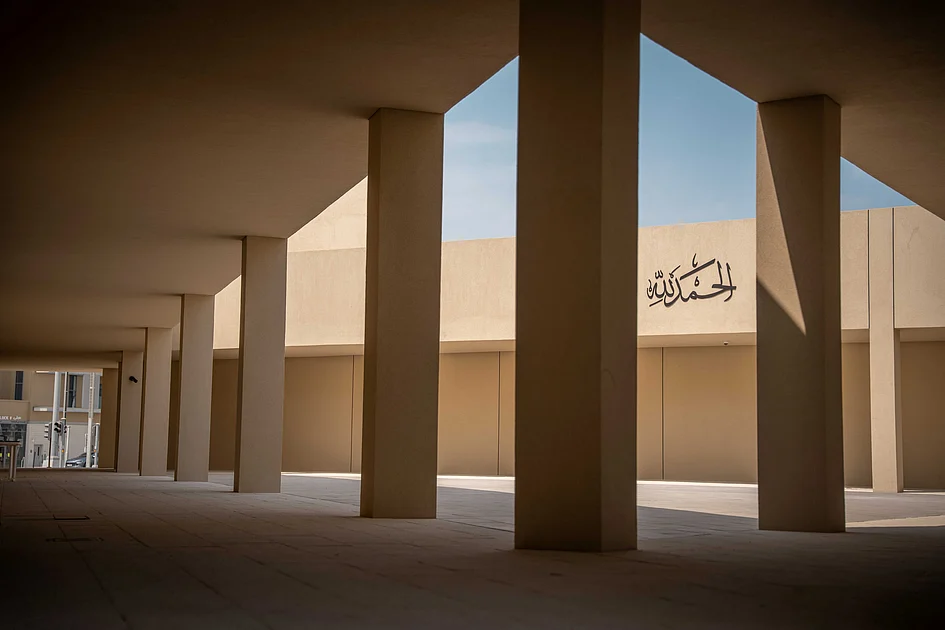
Masdar City has inaugurated a revolutionary place of worship that harmonizes spiritual tradition with cutting-edge environmental technology. The newly opened Masdar City Mosque, capable of accommodating up to 1,300 worshippers during Ramadan peak hours, represents a significant milestone in sustainable religious architecture.
Drawing architectural inspiration from Al Bidyah Mosque, one of the UAE’s oldest surviving mosques, the structure masterfully blends traditional Emirati design elements with advanced engineering solutions. The mosque features a spacious 42-meter-wide column-free prayer hall and a striking 20.2-meter minaret that dominates the Masdar City skyline. A pioneering rammed-earth Qibla wall, the first of its kind in Abu Dhabi’s public buildings, provides natural temperature regulation while honoring centuries-old regional construction techniques.
The mosque’s net-zero energy certification stems from its comprehensive sustainability systems. Over 1,000 square meters of solar photovoltaic panels installed on rooftops and shaded parking areas generate 100% of the building’s annual energy requirements. Passive design strategies including optimal orientation, shaded arcades, natural ventilation, and daylight harvesting significantly reduce energy consumption. The facility also introduces Abu Dhabi’s first mosque-based greywater recycling system, treating water used for ablution and repurposing it for landscape irrigation.
Ahmed Baghoum emphasized the project’s philosophical foundation, stating, ‘Sustainability is deeply rooted in Islamic teachings, which call for balance, moderation, and stewardship of the Earth.’ The mosque has earned prestigious certifications including LEED Platinum, 4 Pearl Estidama ratings, and Net-Zero Energy Certification from the International Living Future Institute.
Opened during the UAE’s Year of Family initiative, the mosque serves dual purposes as both a spiritual center and community gathering space. Beyond Ramadan, the facility will host faith-based and cultural events throughout the year, reinforcing its role as a beacon of sustainable development and community engagement.