Scientists from Shanghai have achieved a groundbreaking advancement in medical artificial intelligence with the development of DeepRare, the world’s first evidence-based reasoning diagnostic system specifically engineered for rare disease identification. This pioneering technology represents a significant leap beyond conventional medical AI systems, offering superior diagnostic capabilities across multiple parameters.
The innovative system emerged from a collaborative effort between Shanghai Jiao Tong University’s School of Artificial Intelligence and Xinhua Hospital Affiliated to Shanghai Jiao Tong University School of Medicine. Their research findings were formally published in the prestigious scientific journal Nature, marking a milestone in medical AI development.
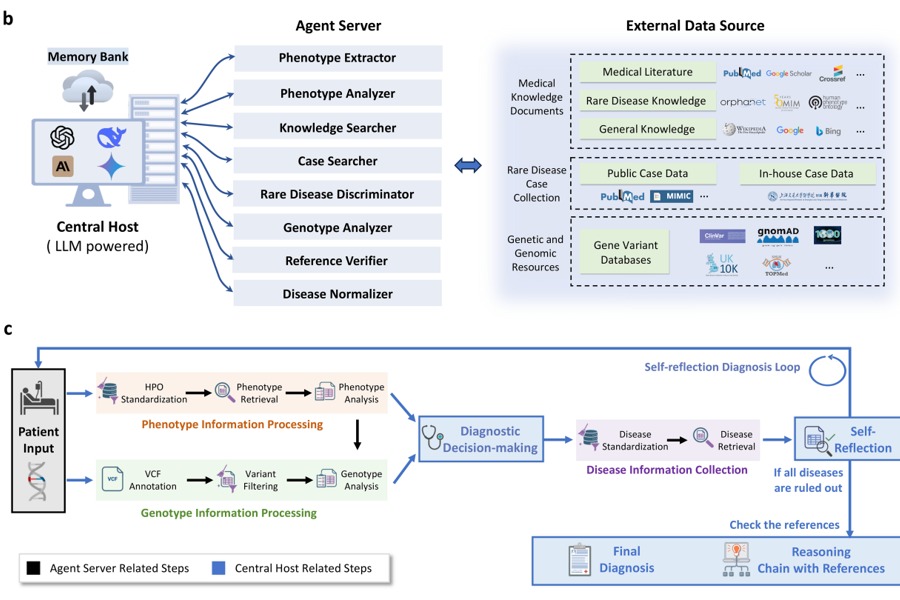
DeepRare distinguishes itself through its unique architecture that integrates extensive medical literature databases with real-time clinical information. Unlike traditional AI that depends on rapid pattern recognition, this system emulates the methodical ‘slow thinking’ approach characteristic of human medical experts. The technology engages in proactive information gathering by asking clarifying questions to address knowledge gaps, then refines diagnostic hypotheses through continuous cycles of verification and self-assessment to eliminate potential logical inconsistencies.
A critical feature of DeepRare is its transparent decision-making process. Every diagnostic conclusion generated by the system includes a comprehensive evidence trail, enabling physicians to understand not just the final diagnosis but the complete reasoning pathway that led to that determination.
In performance evaluations using only clinical phenotype information without genetic data, DeepRare demonstrated remarkable diagnostic accuracy of 57.18%—representing a substantial 23.79 percentage point improvement over previous international models. This capability positions the system as an invaluable tool for initial screening in primary healthcare environments where specialized diagnostic resources may be limited.
The system’s performance reaches even greater heights when augmented with genetic sequencing data. In complex clinical scenarios utilizing multimodal information, DeepRare achieves comprehensive diagnostic accuracy exceeding 70.6%, dramatically outperforming the widely adopted international benchmark tool Exomiser, which records 53.2% accuracy under comparable conditions.