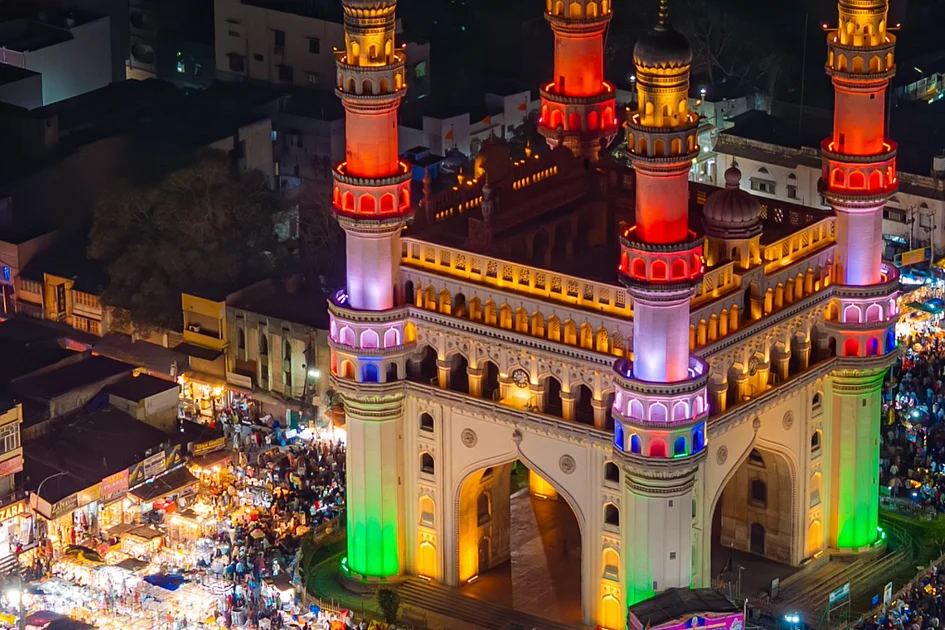
As Ramadan envelops Hyderabad, the historic city undergoes a remarkable nocturnal transformation, with its culinary landscape dominated by the aromatic presence of Hyderabadi Haleem. This labor-intensive delicacy, requiring up to 12 hours of meticulous preparation, has become synonymous with the holy month’s culinary traditions.
The preparation process unfolds across numerous locations, particularly in the Charminar district, where chefs tend to massive vessels on traditional ‘bhattis’ (brick and mud ovens). The complex recipe incorporates an array of ingredients including premium mutton, wheat, dals, basmati rice, almonds, and an exquisite blend of spices such as cardamom, cinnamon, cloves, and cumin.
Haleem’s journey from its Arabic origins to its current iconic status in Hyderabad represents centuries of culinary evolution. The adaptation through incorporation of local spices and ingredients has elevated it to such prominence that in 2010, it became India’s first meat product to receive Geographical Indication status.
The culinary phenomenon extends beyond mere food preparation, sparking significant cultural and economic activity. Long queues form outside establishments ranging from humble roadside eateries to luxury hotels, all serving the sought-after dish. As afternoon approaches, kitchens shift to packaging operations to meet overwhelming demand.
Parallel to the culinary celebrations, Hyderabad experiences a cultural renaissance during Ramadan nights. Historic neighborhoods including Laad Bazaar—renowned for lacquer bangles, pearls, and perfumes since the 1590s—bustle with activity until midnight. The city’s architectural heritage, particularly around the illuminated Charminar monument, becomes a focal point for both residents and visitors.
This cultural vibrancy has inspired innovative tourism initiatives. Mohammed Sibghatullah Khan, a 25-year-old architect and founder of The Deccan Archive, conducts nighttime walking tours that explore Hyderabad’s architectural legacy and urban evolution. These tours attract diverse participants including domestic tourists, NRIs from Gulf countries, and international visitors, all seeking to experience the city’s unique Ramadan atmosphere.
The convergence of culinary tradition, historical commerce, and cultural tourism during Ramadan demonstrates Hyderabad’s distinctive ability to preserve heritage while embracing contemporary expressions of community and identity.