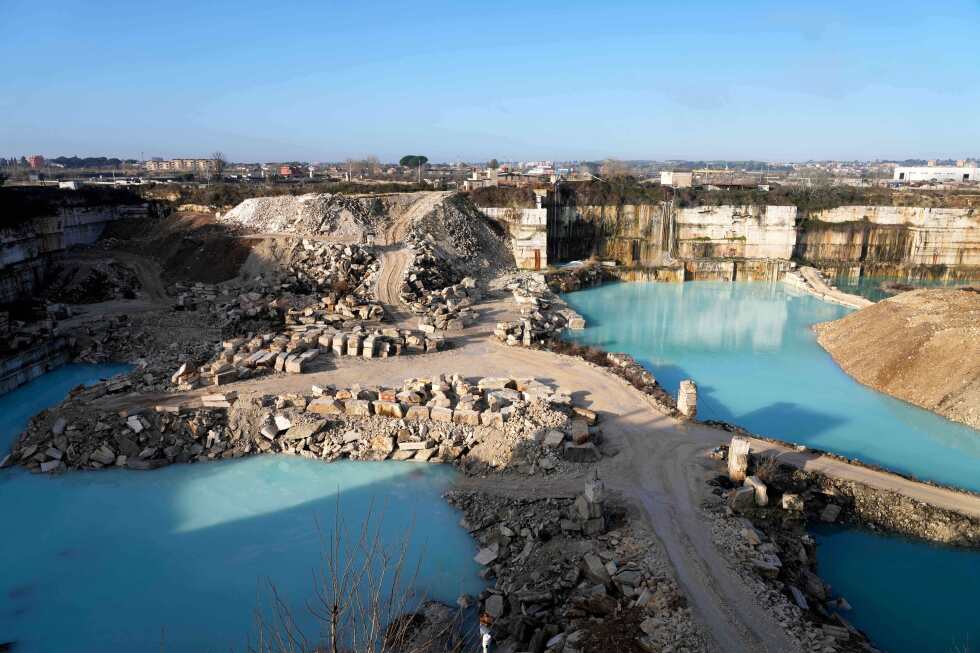
For two millennia, the subterranean quarries of Tivoli, Italy have supplied the distinctive pock-marked stone that built Rome’s architectural marvels and now graces contemporary structures worldwide. This porous limestone, known scientifically as lapis tiburtinus and commonly as travertine, formed through mineral deposits from sulfuric springs over hundreds of thousands of years, capturing regional volcanic history within its striated layers.
From the Colosseum constructed in 70-80 AD to Bernini’s magnificent St. Peter’s Square colonnade completed in 1667, travertine has demonstrated exceptional durability against environmental challenges. The stone’s unique composition of calcium carbonate minerals provides both structural integrity and aesthetic versatility, appearing in finishes ranging from rough-textured to polished sleek, with color variations from warm white with black voids to veined beige with gray, brown, or greenish tones.
The Mariotti Carlo SpA stonecutting firm, operating for four generations, continues this ancient tradition by fulfilling prestigious international commissions. Their current projects include supplying travertine for the reconstruction of a Latter-day Saint temple in Manhattan and major developments in Riyadh and Shenzhen. Fabrizio Mariotti, head of the family enterprise, describes travertine as “carrying the light of Rome everywhere” due to its distinctive reflective qualities.
At the Degemar quarries, where Baroque master Bernini once maintained a residence to personally select materials, extraction continues 30 meters below sea level. Vincenzo De Gennaro, current quarry director, notes that the stone’s 2,000-year performance in Roman structures provides undeniable proof of its longevity. Professor Marco Ferrero of La Sapienza University adds that travertine embodies Rome’s spirit—solid and noble without marble’s ostentation—comparing it to “Roman dialect” versus marble’s “literary Italian.”