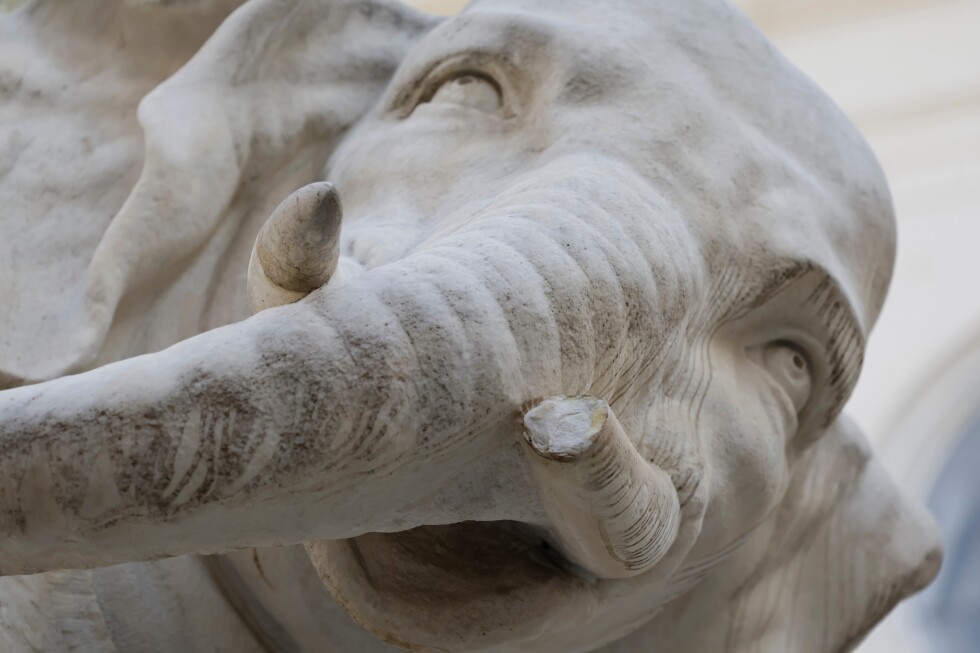
Roman authorities have launched a criminal investigation after the iconic elephant sculpture designed by Baroque master Gian Lorenzo Bernini suffered damage to its left tusk for the second time in seven years. Police discovered an 11-centimeter marble fragment near the monument over the weekend, though forensic analysis revealed the broken piece originated from restoration work in 1977 rather than Bernini’s original 1667 creation.
The beloved sculpture, situated in Piazza della Minerva near the Pantheon, previously experienced similar vandalism in 2016 when the same tusk tip was broken off. Security camera footage is currently under review to identify potential perpetrators behind this latest incident.
Commissioned by Pope Alexander VII, the elephant monument serves as an elaborate base for an ancient Egyptian obelisk discovered by Dominican friars in the grounds of their Santa Maria Sopra Minerva convent. The work represents a fascinating historical compromise between artistic vision and practical considerations – while Bernini believed the elephant’s four legs could support the obelisk’s weight, the friars insisted on adding a stone support beneath its belly, resulting in the sculpture’s distinctive stocky appearance that earned it the local nickname ‘Minerva’s Piglet.’
According to popular legend, Bernini exacted subtle revenge on the friars by positioning the elephant’s rear end with its raised tail pointed toward their convent. The sculpture remains one of Rome’s most visited tourist attractions, drawing millions of visitors annually to witness this unique blend of artistic genius and historical narrative.