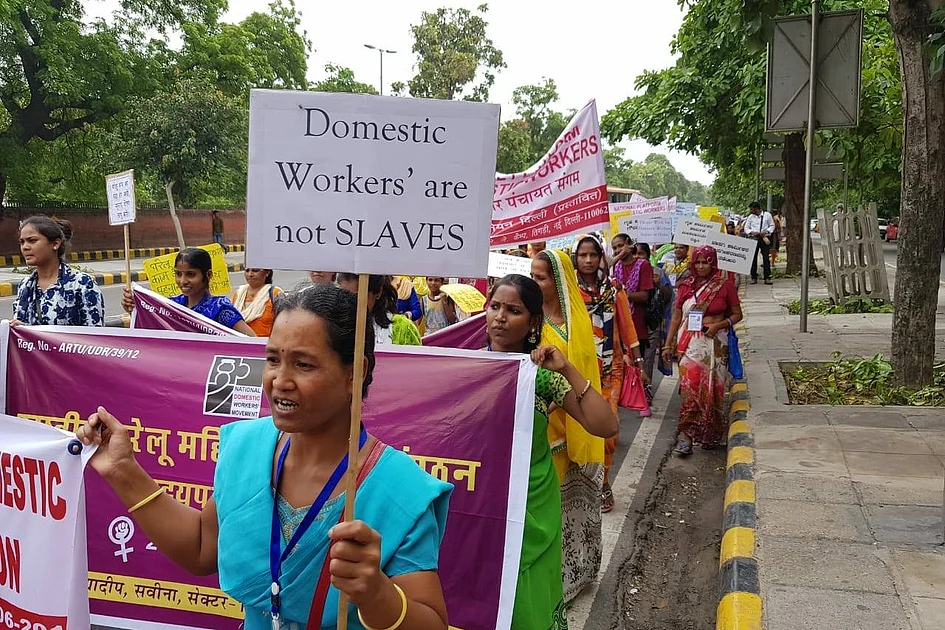
India faces a mounting crisis regarding the protection of its vast domestic workforce, with millions remaining vulnerable due to inadequate legal safeguards. The Indian Supreme Court has recently expressed concern over the plight of these workers, predominantly women, and called upon state governments to establish appropriate mechanisms for their inclusion under minimum wage legislation.
Domestic workers’ unions have been granted permission by the court to submit detailed representations highlighting the severe exploitation faced by this marginalized workforce. These representations argue that excluding household workers from the Minimum Wages Act constitutes a violation of fundamental rights against forced labor and the right to life.
Official statistics significantly underestimate the scale of the issue, reporting approximately 5 million domestic workers with over 3 million being women. However, International Labour Organisation estimates suggest the actual number could reach 80 million nationwide. Most concerning is that a substantial portion of these workers are young female migrants from rural areas seeking employment in urban centers, often facing arbitrary hiring and firing practices without documentation.
Despite judicial intervention, progress remains limited with only 14 of India’s states having enacted minimum wage laws for domestic workers. The absence of a unified platform for these workers to advocate for their basic rights further compounds the problem. Organizations like the Self-Employed Women’s Association (SEWA) work extensively to raise awareness about workers’ rights but face resistance from employers opposed to regulatory measures.
The judicial response has included criticism of trade unions, with Chief Justice Surya Kant noting that union activities have historically impacted industrial growth negatively. While acknowledging worker exploitation, the justice emphasized the importance of individual rights awareness and skill development rather than relying solely on union intervention.
Proposed solutions include formal recognition of domestic work as a regular employment category with standardized working hours, and mandatory registration systems for both workers and employers to ensure accountability and legal protection for all parties involved.