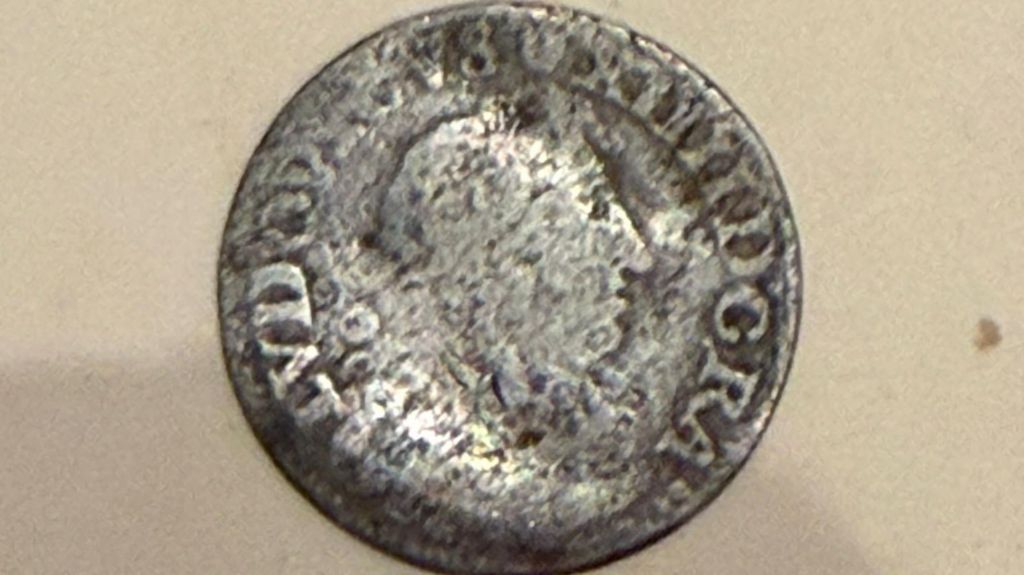
A significant historical artifact has been discovered by metal detectorist Ian Deveney on lands between Inverness and the Culloden Battlefield. The find—a French 4 sols coin dating back to the 1670s—potentially served as payment for soldiers who fought in the pivotal Battle of Culloden 280 years ago.
Deveney, a Scottish history tour guide and member of the North Detectorists group, made the discovery earlier this month while surveying areas rich in Highland heritage. “I was near the end of the day and quite tired when I received this strong signal,” Deveney recounted. “Upon digging, I uncovered what I initially believed to be a medieval hammered coin, but after careful cleaning, I realized it was French currency from the 17th century.”
The coin’s presence in the Scottish Highlands reveals fascinating historical connections. France provided financial support to the Jacobite cause during the 1745 uprising led by Charles Edward Stuart, better known as Bonnie Prince Charlie. This backing was partly strategic, intended to divert British military resources from continental conflicts.
Historical records confirm that Jacobite fighters, particularly the Irish Piquets, Royal Ecossais, and FitzJames’s regiments, received payment in French currency. The Battle of Culloden, fought on April 16, 1746, marked the final pitched battle on British soil and resulted in the devastating defeat of the Jacobite forces, with approximately 1,600 casualties.
The discovery has been reported to Treasure Trove Scotland, the organization responsible for determining whether archaeological finds should be allocated to museums. This finding adds to a series of recent historical discoveries at Culloden, including musket balls uncovered last October that archaeologists believe relate to the battle’s final actions.
Deveney’s expertise in Scottish history provided crucial context for understanding the significance of the coin, offering tangible evidence of the international dimensions of the Jacobite uprising and its connections to European power dynamics of the period.