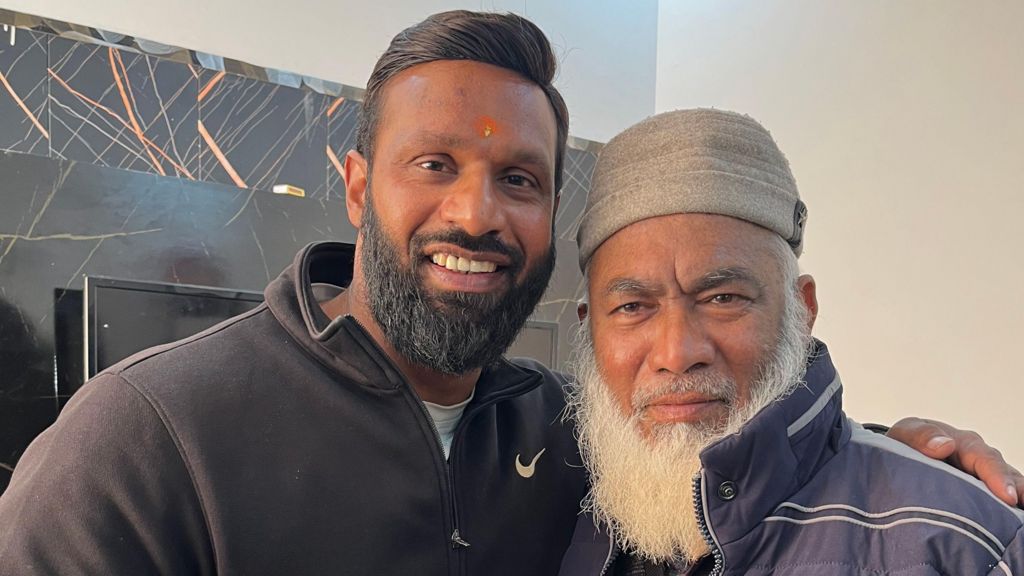
In an extraordinary display of interfaith solidarity, a Hindu gym owner from Kotdwar, Uttarakhand has emerged as an unexpected national icon after defending a Muslim shopkeeper from religious harassment. Deepak Kumar, 42, intervened on January 26 when he witnessed activists from the hardline Hindu group Bajrang Dal accosting 68-year-old Vakeel Ahmed over his shop name ‘Baba School Dress and Matching Centre’.
The confrontation escalated when approximately half a dozen vigilantes demanded Ahmed remove ‘Baba’ from his establishment’s signage—a term commonly used across religious lines in India to denote respected elders or spiritual figures. The activists claimed the reference exclusively belonged to Siddhabali Baba, a local Hindu temple deity, and insisted a Muslim merchant had no rights to its usage.
Kumar’s spontaneous intervention, captured in a viral video, shows him challenging the group’s religious discrimination with the poignant question: ‘Are Muslims not citizens of India?’ When pressed for identification, he deliberately responded ‘Mohammad Deepak’—a symbolic fusion of Hindu and Muslim names—asserting his Indian identity transcends religious boundaries.
The incident has triggered polarized reactions across the nation. While political figures like Congress MP Rahul Gandhi hailed Kumar as ‘a hero of India’ fighting for constitutional values, the gym owner faced vehement backlash from right-wing groups. Over 150 Bajrang Dal supporters protested outside his business, and Kumar received numerous death threats alongside abusive social media messages.
The aftermath has taken a personal toll: Kumar’s previously thriving gym now operates at barely 10% capacity as patrons withdraw due to safety concerns, creating financial strain. His family reportedly lives in fear amid ongoing harassment. Nevertheless, support has poured in nationally, with strangers purchasing gym memberships in solidarity and social media users celebrating his courage.
Police have registered cases from both parties—against unidentified harassers following Ahmed’s complaint, and against Kumar himself based on allegations from Hindu activists. The case continues to spark national dialogue about religious coexistence, constitutional rights, and rising communalism in contemporary India.
Despite the consequences, Kumar remains resolute, stating: ‘If we remain silent today, tomorrow our children will also learn the same silence.’ His stance has been widely characterized in Indian media as a rare beacon of hope in increasingly polarized times.