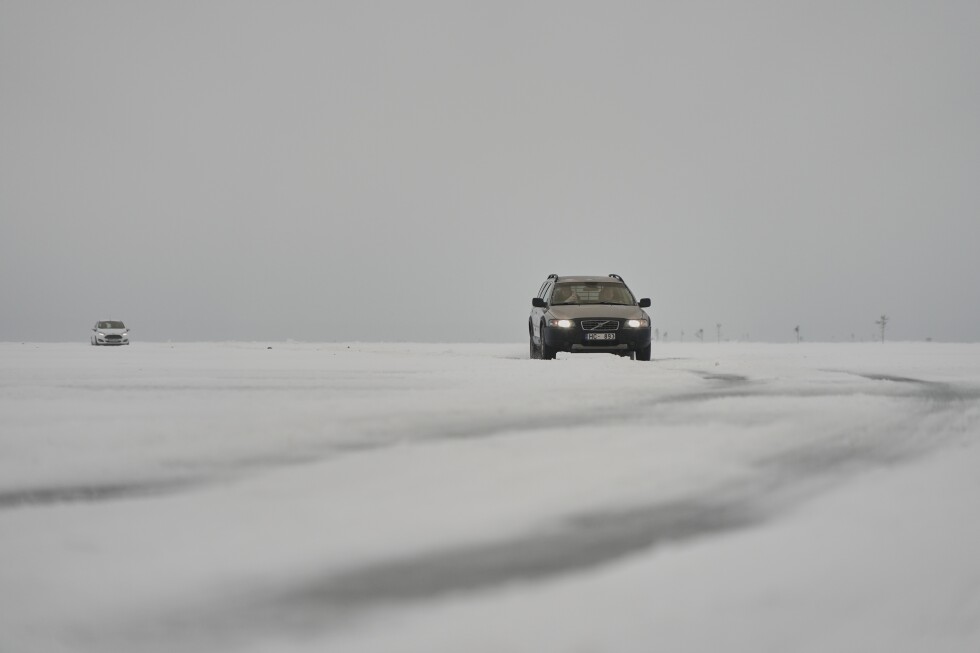
A remarkable natural phenomenon has emerged in northern Europe as exceptionally low temperatures enabled the opening of a 20-kilometer (12.5-mile) ice road across frozen Baltic Sea waters, connecting Estonia’s two largest islands. The officially sanctioned route between Saaremaa and Hiiumaa islands commenced operations Sunday afternoon, with queues of vehicles eagerly awaiting passage.
The decision to formalize the ice crossing came after local residents began spontaneously traversing the frozen sea despite significant safety risks. Ferry services had encountered substantial difficulties maintaining regular operations amid sustained subzero temperatures reaching minus 10 degrees Celsius (14°F). For Hiiumaa’s 9,000 residents, this frozen passage provides vital access to Saaremaa’s larger population center of 31,000 people for essential services including shopping, education, and mainland connections.
Hiiumaa Mayor Hergo Tasuja emphasized that while practical necessity drove the road’s establishment, ice travel remains deeply embedded in regional culture. “For generations, local people who live here, especially those near the sea, swim and use boats in summer,” Tasuja explained. “In winter, it’s in their blood to go to the sea and step out on the ice.”
Construction company Verston Eesti, responsible for road maintenance, implements rigorous safety protocols. Teams measure ice thickness every 100 meters, requiring minimum 24 centimeters (9.5 inches) of solid ice for vehicle passage. Workers continuously smooth over ridged surfaces and monitor weather conditions around the clock, adjusting the route as needed.
Strict regulations govern ice road usage: vehicles cannot exceed 2.5 tons, must maintain either below 20 kph or between 40-70 kph speeds to prevent dangerous vibrations, and must keep safe distances without stopping. Unconventional safety measures include prohibited seatbelt use and requirements for easily openable doors to facilitate rapid evacuation if necessary.
This marks the first successful ice road connection between the islands in approximately eight years, following a period of unusually warm winters that prevented safe freezing conditions. Verston Eesti has received additional contracts to establish two more ice routes connecting mainland Estonia to smaller islands this week.