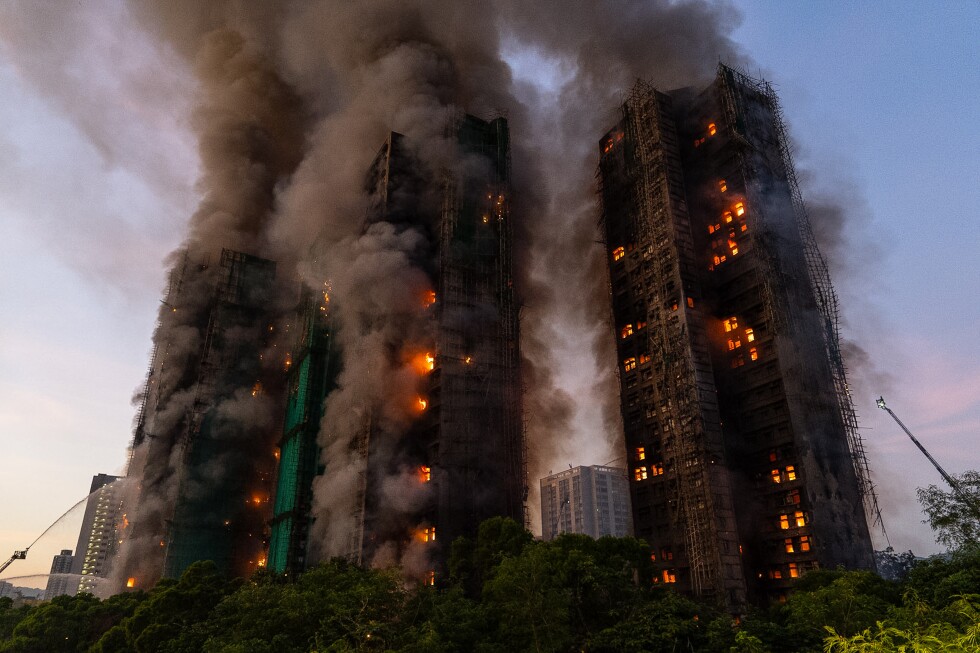
HONG KONG — Survivors of Hong Kong’s deadliest fire in decades continue facing profound housing uncertainty more than two months after the catastrophic blaze that claimed 168 lives on November 26, 2025. The Wang Fuk Court apartment complex inferno not only destroyed physical structures but shattered a tightly-knit community, leaving residents displaced and emotionally scarred as they await permanent resettlement solutions.
Authorities have yet to announce comprehensive long-term housing plans despite completing surveys of resident preferences. The approaching Lunar New Year on February 17 intensifies emotional distress as survivors recall traditional celebrations in homes now reduced to ashes.
The tragedy’s origins trace to substandard scaffolding netting and foam boards from building maintenance work, which authorities identified as primary factors in the fire’s rapid spread. While some arrests followed the incident, an independent committee continues investigating the exact causes.
Personal accounts reveal deep emotional trauma and logistical challenges. Eighty-seven-year-old Pearl Chow and her grandson Dorz Cheung, 33, now occupy separate 100-square-foot temporary units despite decades of shared living. “Only permanent residence is called home. That’s the root,” Cheung stated, capturing the sentiment of many displaced residents.
The fire disproportionately affected elderly residents, with census data showing over one-third of the complex’s 4,600 residents were aged 65 or above. Seventy-four-year-old Kit Chan, who raised her family in the complex over four decades, now occupies a youth hostel unit half the size of her original apartment. “It’s like being unable to get by in my final years,” she expressed.
Despite government proposals in January to combat bid-rigging in building maintenance and enhance fire safety standards, survivors feel their immediate housing needs remain unaddressed. Twenty-three-year-old Isaac Tam noted the particular challenges faced by elderly family members, including his 92-year-old grandfather who lost his daily social routines along with his home.
The human cost extends beyond physical displacement. Forty-eight-year-old Phyllis Lo lost her 74-year-old mother in the fire and now grapples with questions about preventable safety failures. “I wondered if the tragedy could have been avoided if each government department had done a better job,” she reflected.
Disaster recovery expert Professor Jack Rozdilsky of York University emphasized that successful resettlement requires addressing both physical and community needs. “While rebuilding living spaces is complicated, reconstructing a community is much harder,” he noted, stressing the importance of incorporating familiar gathering spaces and social infrastructure.
The government confirmed in emailed statements that it has received survey responses from over 95% of homeowners and is analyzing preferences, but provided no timeline for announcing final resettlement plans.