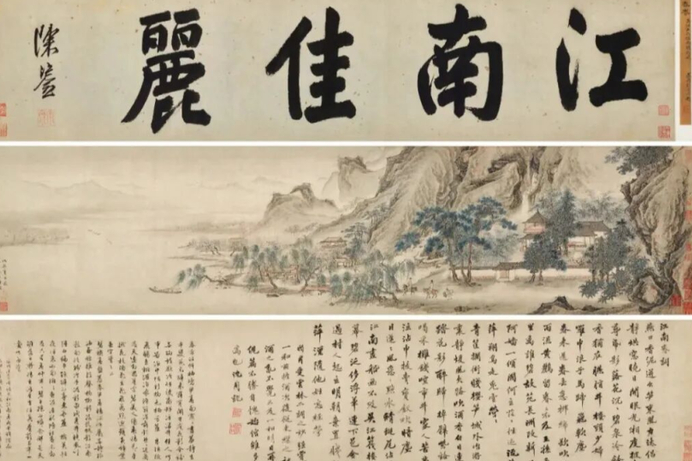
A comprehensive investigation into the Nanjing Museum has uncovered profound institutional failures in the management of donated cultural artifacts, resulting in disciplinary actions against 24 individuals and criminal referrals for suspected illegal activities. The probe, jointly conducted by the Jiangsu Provincial Party Committee and People’s Government under the guidance of the National Cultural Heritage Administration, followed the shocking appearance of a donated Ming Dynasty painting at a Beijing auction with an estimated value of $12.5 million.
The investigation was triggered in 2025 when ‘Jiangnan Spring,’ a priceless artwork donated by renowned collector Pang Zenghe (1864-1949), surfaced at auction. This incident prompted widespread concern about museum artifact security and prompted an exhaustive examination spanning 12 provinces and municipalities. Investigators conducted over 1,100 interviews, reviewed 65,000 documents, collected 1,500 pieces of evidence, and compared 30,255 calligraphy and painting artifacts.
Findings revealed that multiple institutions—including the original Jiangsu Provincial Department of Culture, Nanjing Museum, and Jiangsu Provincial Cultural Relics Store—systematically violated cultural relics management regulations. The investigation identified illegal approvals for artifact transfers and unauthorized sales that caused severe social repercussions.
Former executive vice-president Xu Huping emerged as a central figure in the scandal, having bypassed mandatory appraisal and review procedures to authorize the illegal transfer and sale of artifacts. Despite explicit prohibitions from national authorities, Xu, who simultaneously served as legal representative and manager of the cultural relics store, approved these transactions. His tenure was characterized by significant management deficiencies including asset accounting discrepancies, inappropriate role consolidation, and critical oversight failures.
The probe also implicated Zhang, an employee from the museum’s cultural and creative department, who exploited her state asset management position for personal gain through illegal artifact trading. Supervisory bodies including the Jiangsu Provincial Department of Culture and Tourism and Jiangsu Provincial Cultural Heritage Bureau were found negligent in overseeing subordinate units.
Nanjing Museum has issued a formal apology acknowledging systemic management failures and damage to institutional credibility. The museum committed to enhancing internal controls, increasing transparency, and ensuring proper handling of donated cultural relics. Three of the five missing paintings have been recovered and returned to the museum’s collection following legal consultations, while efforts continue to locate the remaining artwork.
The case highlights critical vulnerabilities in China’s cultural heritage protection systems and underscores the need for strengthened oversight mechanisms to prevent similar incidents involving priceless historical artifacts.