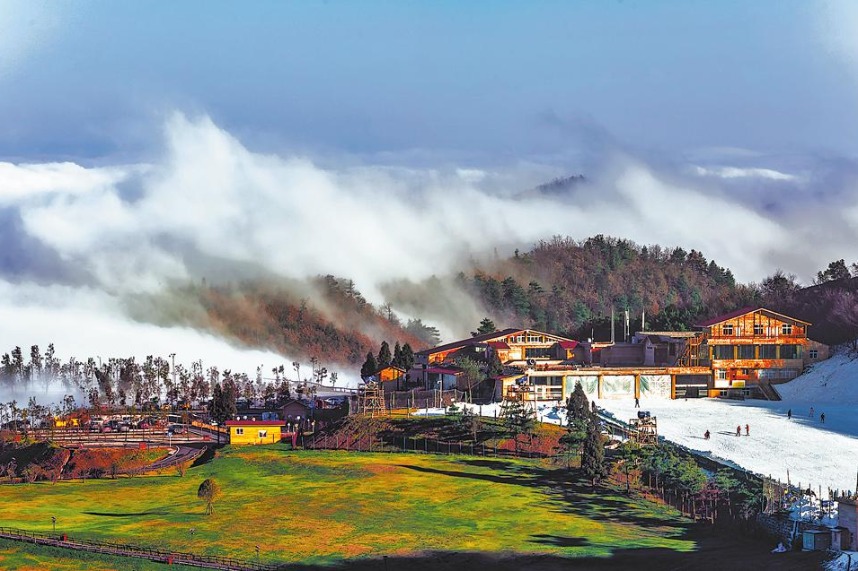
Nestled within the forested highlands of Guizhou province, Liupanshui has emerged as an unexpected powerhouse in China’s winter tourism landscape, challenging the traditional dominance of northern regions with its innovative ‘ski-and-soap’ hospitality model. This mountain city has masterfully combined technical alpine skiing with luxurious geothermal spring experiences, creating a unique ‘two extremes in one day’ offering that is drawing visitors from across southern China.
The Yushe Snow Mountain Ski Resort, operating at one of China’s lowest latitudes for alpine skiing, has evolved beyond basic winter recreation to cater to an increasingly sophisticated market. This season, the resort introduced Guizhou’s first dedicated snowboard park and expanded its advanced terrain to accommodate growing demand for skill progression. ‘Many visitors no longer find beginner runs sufficient,’ noted site manager Li Baogang, whose forest-encircled resort regularly hosts over 10,000 daily visitors.
Accessibility proves to be a decisive advantage for these southern slopes. Travelers from Guangdong province can reach Liupanshui via high-speed rail in mere hours, avoiding the extreme cold of northern destinations while enjoying comparable winter sports facilities. ‘It is not as cold as the north, and transport is more convenient,’ confirmed Wang Yixue, a visitor from Guangzhou.
Meanwhile, Meihuashan Ski Resort has positioned itself as a family-friendly winter theme park just five kilometers from the city center. With 98 wood cabins and a coaching staff of 130 professionals—including 40 imported from Northeast China—the resort has launched an ambitious youth engagement initiative, distributing 100,000 free student tickets to cultivate a new generation of southern skiers. Daily cultural performances and extended evening hours until 9 pm complement the winter sports experience.
The complete Liupanshui experience culminates at Baichehe Hot Spring Resort, located approximately 50 kilometers from Yushe, where visitors can soak in outdoor pools maintained at approximately 50°C. The resort has developed distinctive bathing experiences including ‘raw spring’ and tea-infused pools that provide therapeutic warmth after a day on the slopes. ‘The contrast between skiing and a hot-spring soak is uniquely refreshing and helps relax the body,’ commented a visitor surnamed Luo from Guiyang.
Capitalizing on this natural synergy, local resorts have launched integrated value packages that bundle skiing, hot spring access, and sightseeing minitrain rides. ‘Visitors can switch easily from daytime skiing to evening soaking,’ explained Wang Mei, deputy general manager of Baichehe Hot Spring Resort, highlighting the seamless transition between winter adventures and thermal relaxation that defines Liupanshui’s emerging tourism identity.