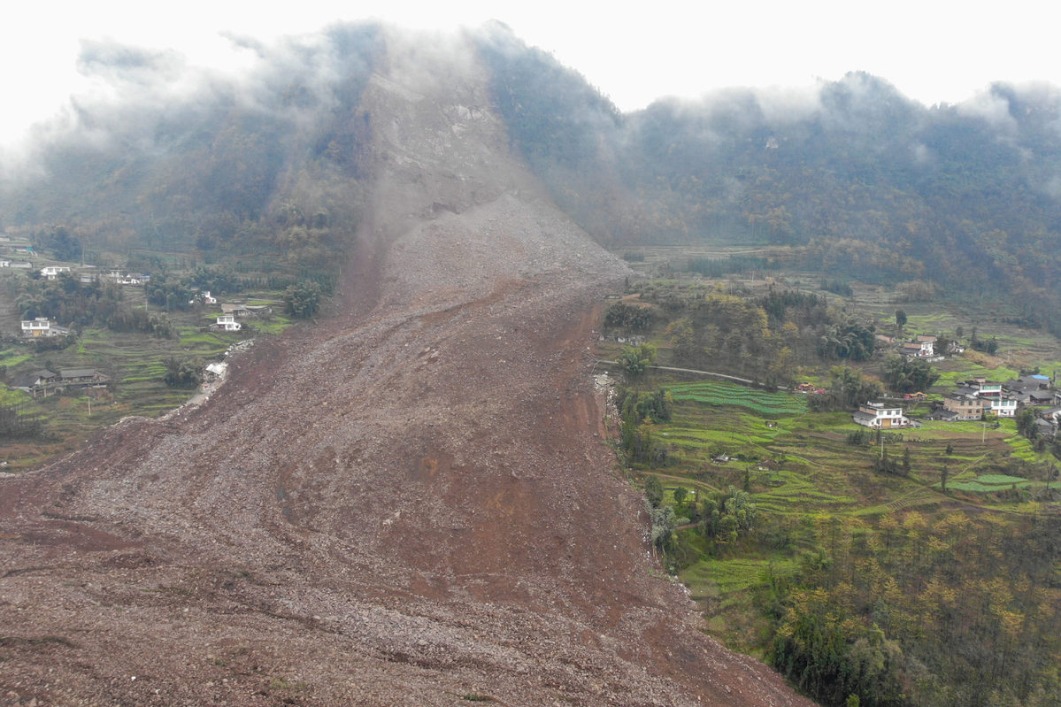
A comprehensive geological investigation has concluded that a devastating landslide in Sichuan Province resulted from natural meteorological phenomena rather than industrial activity. The official report, released by the Provincial Department of Natural Resources, determined that sustained rainfall infiltration weakened mudstone formations on a steep slope, triggering the catastrophic event.
The disaster struck Jinping Village in Junlian County, Yibin City, at approximately 11:50 AM on February 8, 2025. According to the technical analysis, the incident represents a compound natural disaster characterized by an initial high-altitude slope failure that rapidly transformed into an extensive debris flow traveling considerable distances.
Tragically, the geological event resulted in 10 confirmed fatalities, with 19 individuals remaining unaccounted for and two survivors sustaining injuries. Preliminary assessments indicate direct economic damages exceeding 6 million yuan (approximately $862,000 USD).
The investigation specifically addressed potential anthropogenic factors, concluding that no evident correlation exists between mining operations and the landslide’s occurrence. Instead, hydrogeological processes emerged as the definitive causative mechanism, wherein prolonged precipitation progressively saturated and destabilized the slope’s structural integrity.
This findings provide crucial insights for regional disaster prevention strategies, particularly in topographically vulnerable areas experiencing increased rainfall patterns. The technical assessment underscores the importance of geological monitoring and early warning systems in mitigating similar natural hazards in mountainous regions.