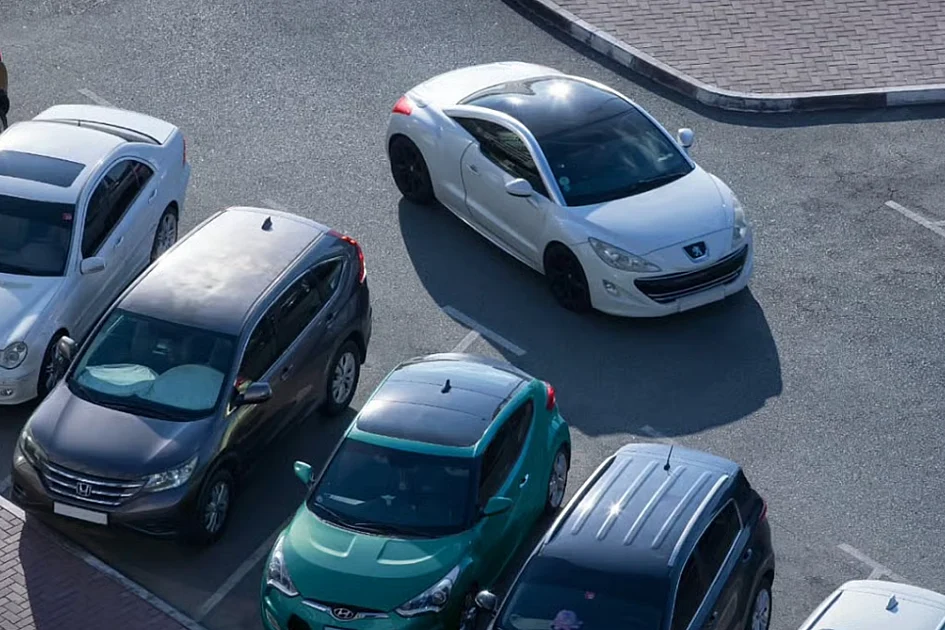
A strategic shift to paid parking regulations in Dubai’s International City has yielded an unexpected yet critical benefit: dramatically improved access for emergency response vehicles throughout the congested residential district. For years, residents endured severe safety concerns as narrow internal roads were perpetually clogged with indiscriminately parked commercial vans, buses, and private vehicles, often rendering passage for ambulances and fire trucks nearly impossible.
Prior to the implementation of paid zones, the area’s clusters—themed after nations like France, Italy, and England—suffered from chronic misuse of their roadways. Large commercial vehicles, including car-lift transporters and delivery trucks, treated the residential streets as free long-term parking lots, creating hazardous, bumper-to-bumper conditions. This not only disrupted daily life but also sparked deep anxiety among inhabitants about potential emergency scenarios where every second counts.
The introduction of paid parking has effectively displaced these non-residential vehicles. Residents now report visibly clearer lanes and a transformed urban environment. Abdul Rahman, a France Cluster resident, recalled the previous struggles, stating, ‘Earlier, if an ambulance or fire truck had to enter our cluster, it would struggle… We used to think, ‘What if something serious happens at night?’’
The solution did not require expensive infrastructure projects like road widening. Instead, it leveraged economic disincentives to correct behavioral misuse of public space. Farah Malik, an Italy Cluster resident with elderly parents, confirmed the palpable change: ‘You can actually see open lanes now… Earlier, vehicles were parked so tightly that even pedestrians had to walk carefully. Now the roads feel wider.’
This case in International City presents a compelling model for urban management, demonstrating how policy tools like parking fees can efficiently enhance public safety and accessibility without resorting to heavy-handed enforcement or capital-intensive construction, ultimately restoring residential areas to their intended function.