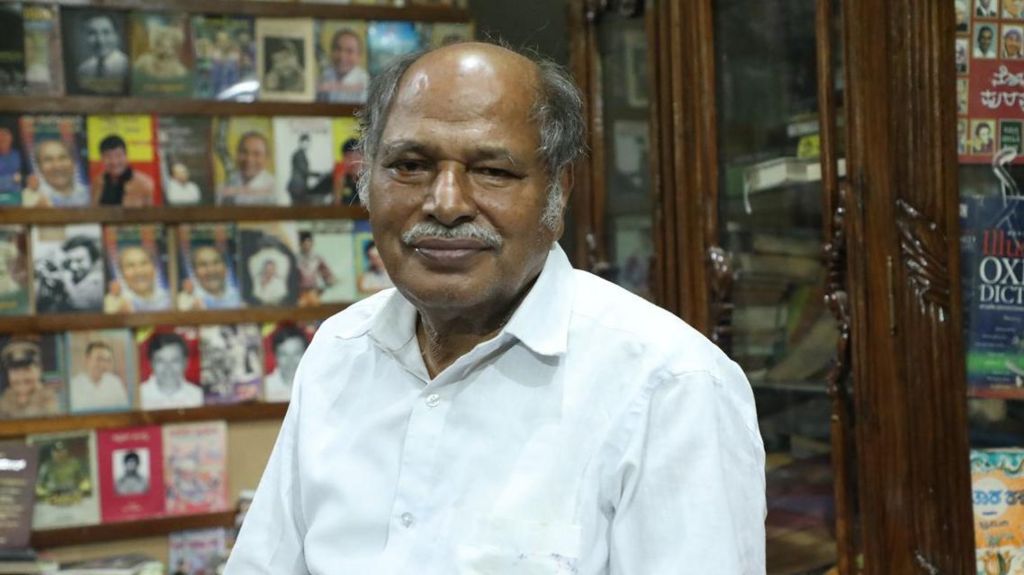
In the quiet municipality of Pandavapura, Karnataka, 79-year-old Anke Gowda has transformed a childhood passion into one of India’s most extraordinary literary institutions. The retired sugar factory worker, recently honored with the prestigious Padma Shri award, has amassed a staggering collection of approximately two million books over five decades, all freely accessible to the public.
Gowda’s journey began in rural poverty where books were considered unaffordable luxuries. His insatiable curiosity led him to sacrifice meals for literature, using food money to purchase volumes about Indian freedom fighters and spiritual leaders that he describes as ‘like candy.’ This personal sacrifice evolved into a systemic mission after inspiration from a teacher who encouraged him to create reading opportunities for other rural students.
After obtaining a postgraduate degree in Kannada literature, Gowda dedicated two-thirds of his factory salary to expanding his collection while supplementing his income through dairy farming and insurance sales. The collection eventually outgrew his home, spilling out of metal trunks and overwhelming his living space until intervention came from unexpected quarters.
The late industrialist Hari Khoday, upon witnessing the scale of Gowda’s collection, funded construction of a dedicated library building spanning 15,800 square feet. Subsequent support from former Chief Minister HD Kumaraswamy expanded the facility with two additional structures, creating the sprawling complex that stands today.
Unlike conventional libraries, Gowda’s establishment operates without professional librarians or systematic organization. Books reside in haphazard stacks on shelves and floors, with approximately 800,000 volumes still awaiting unpacking from sacks beneath the library’s awnings. Despite the apparent chaos, regular visitors attest to Gowda’s uncanny ability to locate any volume instantly.
The library has become an educational hub attracting students, teachers, and scholars from across Karnataka. Assistant Professor Ravi Bettaswami credits the institution with inspiring his own substantial book collection, while government college lecturer Shilpashree Haranu acknowledges the collection’s disorganized appearance but praises Gowda’s intuitive cataloging system.
Now contemplating the future of his legacy, Gowda expresses hope that governmental or public institutions will assume responsibility for maintaining and expanding the collection. ‘I have fulfilled my responsibility,’ he states philosophically. ‘I have done my best, now it is up to others.’