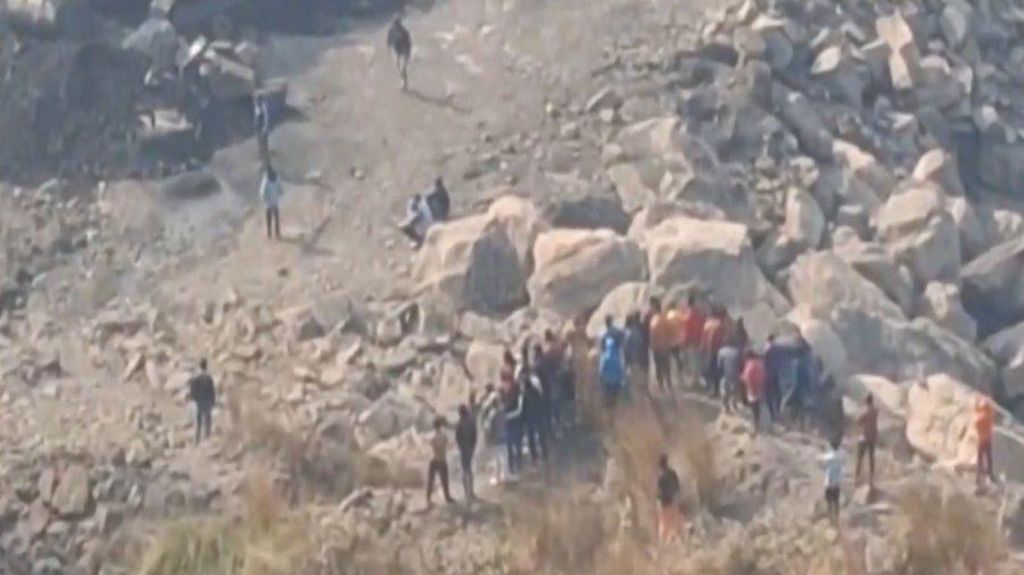
A devastating explosion has ripped through an illicit coal mining operation in India’s northeastern Meghalaya state, resulting in a catastrophic loss of life. Authorities confirm at least 18 miners perished in Thursday’s incident, with one survivor sustaining severe injuries and an undetermined number potentially still trapped beneath the earth.
The tragedy unfolded around 11:00 local time in the remote forested terrain of East Jaintia Hills district, approximately 72 kilometers from the state capital Shillong. According to police superintendent Vikash Kumar, the blast originated deep within the mine’s tunnels and is preliminarily attributed to dynamite detonation—a key component of the outlawed ‘rat-hole’ mining technique.
This perilous method, officially banned since 2014, involves workers crouching through dangerously narrow shafts to extract coal, often using explosives to fracture rock formations. Despite nationwide prohibitions upheld by India’s Supreme Court, the practice has persisted through what activists describe as systemic enforcement failures and alleged political patronage.
Prime Minister Narendra Modi has announced compensation packages of 200,000 rupees ($2,215) for families of the deceased and 50,000 rupees for the injured. Meanwhile, Meghalaya Chief Minister Conrad Sangma pledged accountability, vowing ‘strict legal action’ against those responsible once identified.
The incident marks one of the deadliest mining disasters in recent state history, echoing a 2018 tragedy where 15 miners were trapped in flooded rat-hole tunnels. While rescue operations continue, authorities face significant challenges in identifying both the victims—reportedly mostly from neighboring Assam state—and the mine’s operators, who remain at large.
Activist Agnes Kharshiing, a longtime campaigner against illegal mining, emphasized the inherent dangers of rat-hole operations where workers labor in tunnels barely four feet high. The persistence of such practices highlights the complex interplay of poverty, high coal demand, and inadequate regulatory oversight that continues to claim lives across India’s mining regions.