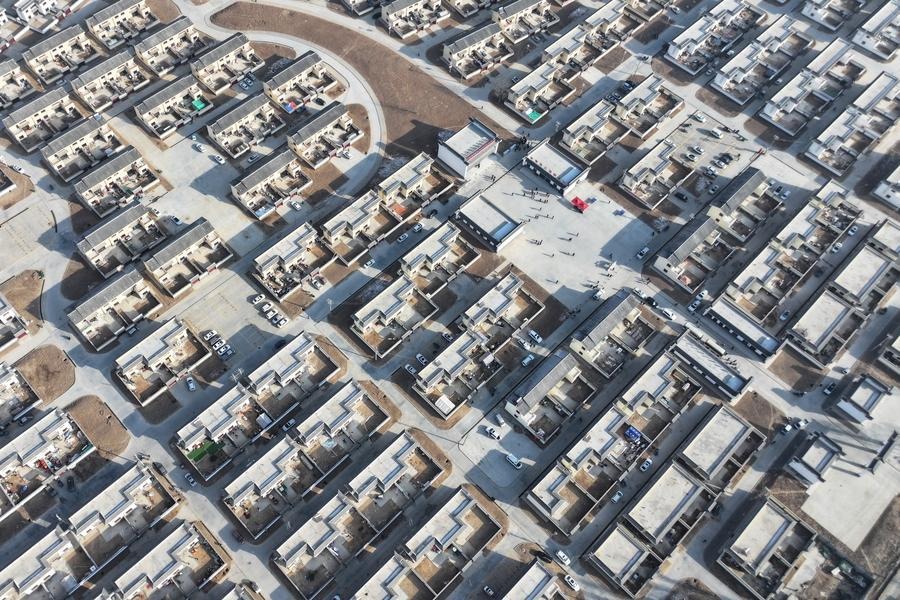
In an extraordinary demonstration of national mobilization, China has completed a comprehensive three-year reconstruction program in just two years for Jishishan county, Northwest China’s Gansu province, following the devastating December 2023 earthquake that measured 6.2 magnitude.
The seismic event, which struck with destructive force, damaged over 230,000 rooms and affected approximately 240,000 residents across more than 50,000 households. The disaster rendered numerous homes uninhabitable, including that of An Mingqiang, a 47-year-old farmer whose property suffered severe structural damage.
Rather than facing a typical agricultural slack season, An now manages an unexpectedly busy schedule tending to his livestock and crops—a testament to the remarkable recovery efforts. Through systematic reconstruction policies implemented since March 2024, An received substantial financial support including a 75,000 yuan subsidy and a 50,000-yuan subsidized loan to rebuild his residence on its original site.
The reconstruction achievement is particularly notable given Jishishan’s challenging environmental conditions. With an average altitude exceeding 2,200 meters and temperatures frequently dropping below -10°C during harsh winters, construction teams from across Gansu province worked tirelessly against climatic obstacles and tight deadlines.
Their efforts culminated in the repair of homes for 28,927 households, the reconstruction of 10,080 houses on original sites, and the completion of all 10,015 new homes across 13 centralized resettlement areas within an eight-month period—a feat residents have come to recognize as characteristic ‘China speed’ efficiency.
Beyond housing solutions, Jishishan county has implemented comprehensive industrial revitalization strategies to ensure sustainable livelihoods. These measures include robust support for livestock through subsidies for purchasing cattle, sheep, and feed; promotion of high-value cash crops like ginseng fruit, pumpkins, and nectarines with free seedlings; land-use rights transfers; greenhouse construction; and deployment of agricultural experts for on-site guidance.
The results speak for themselves: An Mingqiang reported earning tens of thousands of yuan from pumpkin sales alone last year, supplemented by over 80,000 yuan from livestock sales. He has diversified into egg-laying pigeons (whose eggs command 3-5 yuan each) and beekeeping, with 15 hives producing approximately 75 kilograms of honey annually selling for up to 160 yuan per kilogram.
According to Mao Jinhuang, professor at Lanzhou University’s School of Economics, Jishishan’s recovery exemplifies efficient and pragmatic reconstruction methodology. This success stems from scientific planning, systematic resource allocation, collaborative societal support, and mutual aid among affected residents—collectively providing a global benchmark for effective post-disaster reconstruction.