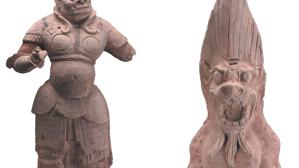
A series of landmark archaeological discoveries across China in 2025 have fundamentally transformed our understanding of the nation’s historical development as a unified multi-ethnic civilization. These groundbreaking findings, recognized at the Chinese Academy of Social Sciences’ annual forum in Beijing, represent six of the most significant research breakthroughs in filling critical gaps in China’s historical narrative.
The Badam east cemetery in Turpan, Xinjiang Uygur Autonomous Region, has emerged as a particularly revealing site, functioning as a miniature ‘Silk Road exposition’ spanning the Jin (265-420) to Tang (618-907) dynasties. The site contains dozens of tombs displaying extraordinary cultural diversity, with artifacts ranging from Central Plains bronze mirrors to Persian silver coins and Central Asian-style jars. Most remarkably, archaeologists uncovered two Tang Dynasty officials’ tombs with intact epitaphs demonstrating continued administrative presence in the western regions even after the An-Shi Rebellion (755-763), challenging traditional historical assumptions about the dynasty’s decline in this period.
Simultaneously, excavations at Shandong’s Langyatai site confirmed historical records of construction by both Emperor Qinshihuang of the Qin Dynasty (221-206 BC) and Emperor Wu of the Han Dynasty (206 BC-AD 220). According to Bai Yunxiang of the Institute of Archaeology, this monumental complex in what was then a remote coastal area served as a powerful political statement asserting central authority over frontier territories.
Prehistoric research similarly yielded transformative results. In Yangyuan county, Hebei, archaeologists established a comprehensive Paleolithic cultural sequence spanning approximately 120,000 to 13,000 years ago, shedding light on a crucial period in human evolution. Meanwhile, new discoveries at Henan’s Peiligang site documented the previously elusive transition from late Paleolithic to early Neolithic periods around 8,000-7,000 years ago.
The Husta Bronze Age site in Xinjiang’s Wenquan county revealed one of the region’s earliest Bronze Age remains (4,800-4,600 years ago), featuring a large burial mound containing layered remains of dozens of individuals that promise valuable genetic insights. Complementary studies at Hebei’s Zhengjiagou site (5,300-4,800 years ago) demonstrated the expanded influence of the Neolithic Hongshan culture during its later developmental stages.
These collective discoveries provide unprecedented physical evidence of China’s long-standing cultural diversity and exchange, offering profound new perspectives on the nation’s historical development as a unified multi-ethnic state.