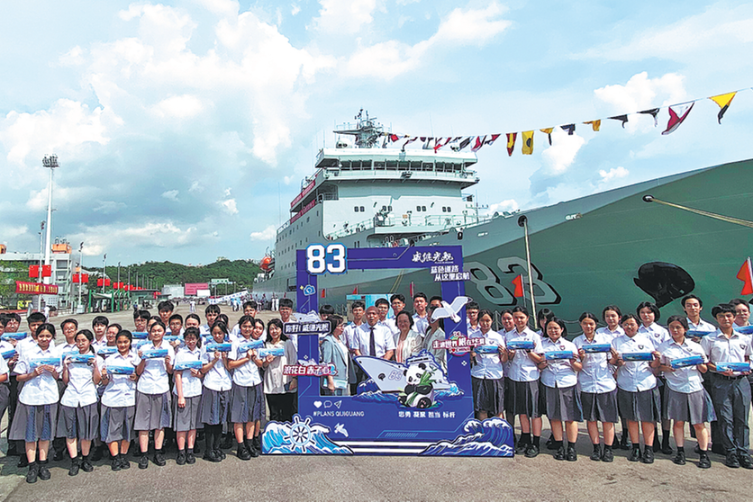
The year 2025 witnessed profound emotional connections forming between Hong Kong residents and mainland China through a series of historic naval visits that transcended mere military demonstrations. These events evolved into powerful symbols of national unity and collective achievement, creating lasting impressions on both visitors and journalists covering these momentous occasions.
The centerpiece of this patriotic narrative was the July visit of China’s first domestically built aircraft carrier CNS Shandong to Hong Kong. Aboard the colossal vessel, retired police officer Kong Kin-chung, 70, articulated the sentiment of many Hong Kong compatriots when he described the carrier as “a powerful symbol” representing a definitive statement of national sovereignty. His emotional reflection drew stark contrasts between the current era and the city’s colonial past, particularly noting the courtesy and discipline of People’s Liberation Army soldiers.
Entrepreneur Lam Tse-shong, who maintains deep connections with the mainland, characterized the experience as an “eye-opener” that crystallized the visit’s central theme: “Secure Country, Sweet Home.” For numerous visitors admiring Victoria Harbour from the carrier’s deck, the Shandong represented not merely military power but a tangible guarantee of Hong Kong’s continued peace and prosperity.
The patriotic momentum continued in October with the arrivals of training ship Qi Jiguang and landing ship Yimengshan, their timing coinciding with the 80th anniversary commemorations of victory in the Chinese People’s War of Resistance Against Japanese Aggression and the World Anti-Fascist War. Student Wang Mengli highlighted how these vessels—named after historical heroes and significant sites—served as powerful instruments of remembrance, connecting past sacrifices with present-day national strength.
Young visitors like Lau Tszkiu, adorned with national flag stickers, expressed awe at the disciplined crew members and shared aspirations to contribute to China’s technological advancement. These interactions demonstrated how the naval visits provided not just spectacle but tangible pathways for Hong Kong’s youth to envision their future roles in national development.
Throughout these exchanges emerged a consistent thread of hopeful optimism—a genuine appreciation for the motherland’s progress coupled with a sincere desire for Hong Kong to actively participate in the nation’s ongoing rejuvenation. Residents perceived these steel hulls as embodiments of collective achievement in which they eagerly sought to share, recognizing that Hong Kong’s stability and unique advantages remain inextricably linked to national prosperity.