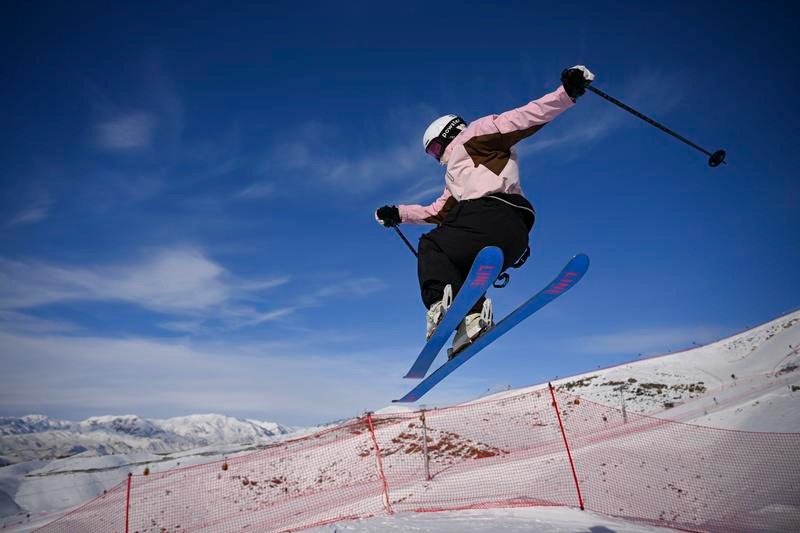
URUMQI, China – At a premier ski resort near China’s northwestern city of Urumqi, 19-year-old Huzar Tohtarhan navigates a demanding schedule between coaching sessions and an unexpected second career as an action sports videographer. The former herder from Miao’ergou village has transformed his childhood passion into a thriving profession, emblematic of Xinjiang’s growing winter tourism economy.
Huzar’s days are structured around tight intervals between day and night skiing sessions, often allowing less than an hour for meals and preparation. His expertise extends beyond instruction to capturing follow-cam footage for clients seeking professional-grade skiing videos. This specialized service has gained significant popularity through social media platforms like Douyin, with approximately 30 skiers booking purely for filming services this winter alone.
The transition from rural herding to ski professionalism represents a remarkable journey. Huzar first encountered snowboarding at age six through his parents, who worked at a local ski area. Despite initial injuries and without formal training, he developed his skills through middle school teams and relentless practice. As China’s skiing popularity surged and Xinjiang developed its winter sports infrastructure, what began as hobby evolved into viable career opportunity.
Local government and village support enabled Huzar to obtain professional instructor certification, marking his official departure from traditional herding life. “Herding meant being under the sun and wind all day, often alone,” he reflected. “Now I’m doing what I truly love.”
His technical proficiency now includes backward skiing for frontal shots—a skill acquired through persistent practice that initially resulted in numerous bruises. Beyond athletic mastery, Huzar emphasizes the human connections forged through his work: “Before, my companions were horses and sheep. Sometimes I didn’t speak all day. Now I meet people from all over.”
The economic impact extends beyond individual success. Nearby villages have developed complementary businesses including guesthouses, restaurants, and extended-hour strawberry-picking gardens, transforming seasonal summer tourism into year-round industry. During Xinjiang’s inaugural “snow holiday” in December 2025, the resort attracted over 20,000 skiers, with Huzar personally instructing more than 500 students this season.
Through social media, Huzar shares technical advice, behind-the-scenes content, and scenic landscapes, hoping to inspire others to discover unconventional career paths. His story reflects broader regional development where traditional livelihoods are evolving alongside emerging economic opportunities in China’s northwestern frontier.