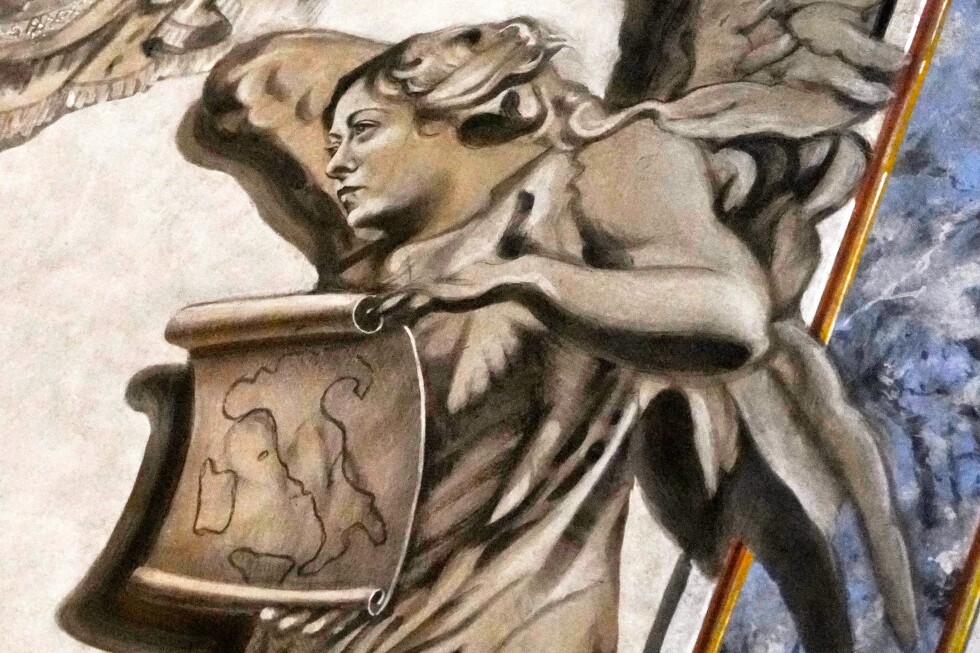
A centuries-old tradition of incorporating contemporary figures into religious artwork has ignited an unprecedented controversy in Rome, where a recently restored cherub bearing remarkable resemblance to Prime Minister Giorgia Meloni has triggered dual investigations by both ecclesiastical and state authorities.
The Basilica of San Lorenzo in Lucina, one of Rome’s most ancient churches consecrated in 440 AD, has become the epicenter of this unusual scandal. The problematic artwork appears in a side chapel near the main altar, depicting a cherub holding a map of Italy in a position of deference before a bust of Italy’s last king, Umberto II. This particular chapel underwent renovation in 2000 and required restoration in 2023 due to water damage.
Both the Diocese of Rome and the Italian Culture Ministry have launched formal inquiries into the restoration work. Their swift response demonstrates institutional intolerance for perceived profanity within sacred spaces. The basilica, though historically significant, has gained newfound celebrity status as curiosity-seekers flock to photograph the controversial angel, sometimes disrupting religious services.
Prime Minister Meloni herself addressed the controversy with humor, writing on social media: ‘No, I definitely don’t look like an angel,’ accompanied by a laughing/crying emoji. Her lighthearted response contrasts with the seriousness of the institutional investigations.
The controversy carries historical weight given Italy’s complex relationship with its monarchical past. Italians rejected the monarchy after World War II due to its support for Fascist dictator Benito Mussolini. Meloni’s right-wing party traces its roots to the neo-fascist movement that succeeded Mussolini, adding political sensitivity to the artwork’s perceived deference to royalty.
Restorer Bruno Valentinetti has denied using Meloni as a model, asserting that any resemblance exists ‘in the eye of the beholder’ and that he merely restored his original 2000 painting. Parish priest Rev. Daniele Micheletti acknowledged the resemblance but dismissed its significance, noting artistic precedent for depicting real people in religious contexts, such as Caravaggio’s use of a prostitute as model for the Virgin Mary.
Cardinal Baldassare Reina, vicar of Rome, has taken a firmer stance, criticizing Micheletti’s blasé attitude and emphasizing that sacred art must not be ‘misused or exploited’ but should exclusively support liturgical life and prayer. The Culture Ministry has deployed special delegate Daniela Porro to ascertain the nature of the work and determine appropriate actions.
The investigations now focus on determining the original appearance of the 2000 cherub and whether the restoration improperly altered its features. The basilica, currently property of Italy’s Interior Ministry, remains open to visitors while authorities determine the appropriate resolution to this intersection of art, religion, and politics.