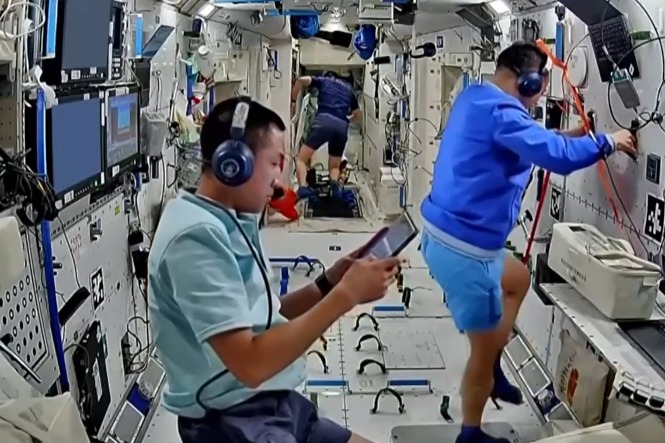
China’s Tiangong Space Station continues to demonstrate exceptional operational performance as the Shenzhou XXI astronaut crew completes their first three months in orbit with all mission parameters exceeding expectations. The three-person team, commanded by veteran astronaut Zhang Lu alongside specialists Wu Fei and Zhang Hongzhang, has executed a comprehensive scientific program while maintaining optimal physiological condition.
The crew’s biomedical research has yielded particularly significant breakthroughs, especially in understanding human adaptation to microgravity environments. Using advanced bionic adhesive footwear technology, the astronauts have conducted systematic lower limb muscle stimulation tests, generating valuable datasets about muscular response in weightless conditions. These investigations aim to develop more effective countermeasures against space-induced muscle atrophy.
Pharmaceutical research has advanced substantially through the pharmacokinetics project, which examines how the human body processes medications differently in space. The collection and preservation of saliva samples for subsequent Earth-based analysis represents a critical step toward establishing safe medication protocols for extended space missions.
Psychological research has received equal emphasis, with the crew participating in sophisticated assessments measuring human-computer interaction dynamics, emotional regulation during extended isolation, and decision-making capabilities under emergency scenarios. These studies contribute to developing better support systems for future deep space exploration.
In the realm of materials science, the astronauts have maintained sophisticated experimental apparatus including a containerless experiment cabinet that uses levitation technology to study material properties without container interference. This has involved meticulous sample management and equipment maintenance procedures.
The crew’s health maintenance protocol incorporates rigorous exercise regimens and comprehensive medical monitoring, including dynamic electrocardiograms, blood pressure surveillance, ultrasound examinations, and bone density measurements. All indicators confirm the astronauts remain in excellent health as they approach the mission’s midpoint.
Launched on October 31, 2025, from Jiuquan Satellite Launch Center, the Shenzhou XXI mission marked another milestone in China’s manned space program with the successful completion of extravehicular activities on December 9. The mission continues to demonstrate China’s growing capabilities in sustained space operations and scientific research.