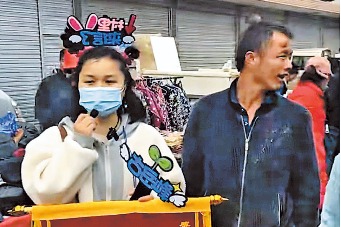
Across China’s countryside, a new generation of digital storytellers is transforming traditional rural markets through the power of livestreaming technology. These content creators are documenting the vibrant tapestry of grassroots commerce while creating meaningful connections between urban viewers and rural producers.
In Hunan province, 37-year-old Guo Na has dedicated her weekends for the past two years to broadcasting from rural markets under her account “Village Letters.” Equipped with multiple smartphones for different platforms including Douyin and WeChat Channels, Guo captures the predawn bustle of these traditional gathering places. “Having grown up in this region, it pains me to see farmers establishing their stalls as early as 3 am merely to secure favorable positions,” she explains. Her mission extends beyond documentation—she actively facilitates sales, having already moved over 100,000 yuan ($14,390) worth of agricultural products.
Meanwhile, in the Ningxia Hui Autonomous Region, Hu Jiayin brings a global perspective to this phenomenon. As an international communication reporter, she broadcasts these authentic Chinese market experiences in English to worldwide audiences. “Market-gathering represents something uniquely Chinese—lively, genuine, and overflowing with human warmth,” Hu observes. “Presenting this through English creates a captivating contrast that serves as an excellent medium for sharing China’s narratives with the international community.
The approaches of these livestreamers reflect careful strategy within spontaneous environments. Hu prepares thematic frameworks for her broadcasts while remaining open to improvisation, often engaging passersby for unrehearsed reactions. Guo alternates between local dialect and Mandarin, conducting intimate interviews with vendors about their produce, preparation methods, and personal stories. Her follower base of 28,000 on each platform consists predominantly of Hunan natives, with significant viewership from Guangdong, Jiangxi, and Hubei provinces.
These digital efforts are generating tangible impacts beyond mere viewership metrics. Hu’s broadcasts have attracted increased visitor numbers, particularly among younger demographics seeking authentic experiences unavailable in sterile supermarket environments. “Young viewers frequently inquire about parking availability, pricing, and travel distances,” Hu notes. “Many express intentions to visit on weekends, drawn by the authenticity that conventional retail establishments cannot provide.
As rural markets modernize with improved safety standards and structured layouts, their essential character remains intact. “Supermarkets prioritize efficiency, whereas markets foster genuine human connection,” Guo reflects. “Where else can consumers converse directly with those who cultivated their vegetables or enjoy traditional opera performances while shopping?”
With Spring Festival approaching—the peak season for rural markets—both creators have prepared special content. Hu plans an English-language feature highlighting Ningxia’s market culture, while Guo intends to collaborate with restaurant owners for bulk procurement of local products.
For these digital pioneers, livestreaming represents not merely a pastime but a significant long-term commitment. Hu aims to present a dynamic, lived-in portrayal of Ningxia to global audiences, while Guo views her work as “valuable documentation” that will endure as a historical record. “I don’t produce disposable content,” Guo states. “I aim to preserve these moments so future generations can understand what rural life truly encompassed.”