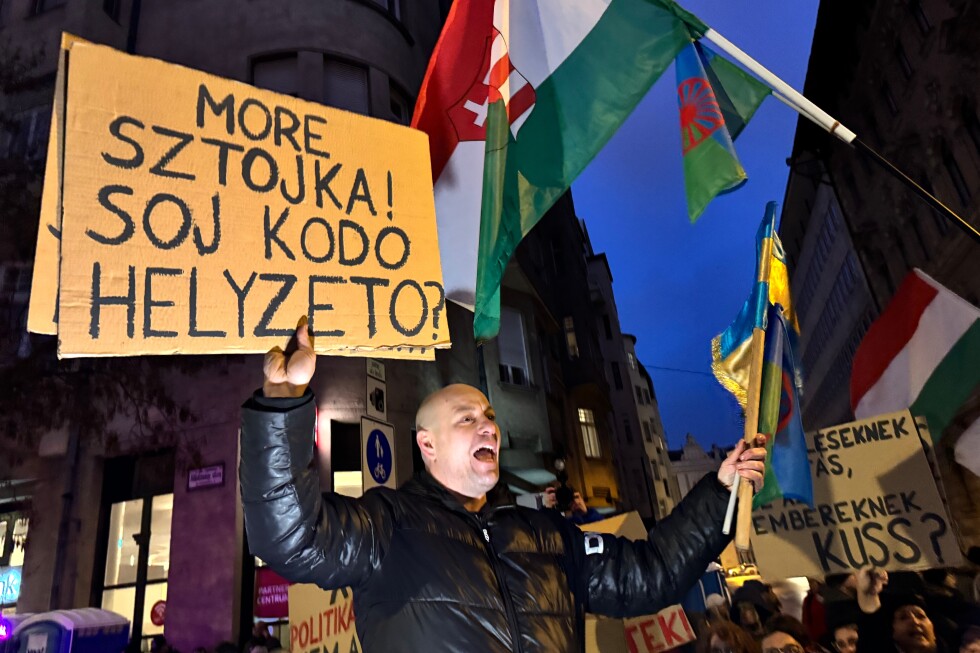
BUDAPEST, Hungary — More than a thousand demonstrators, predominantly from Hungary’s Roma minority, flooded the streets of Budapest on Saturday demanding the immediate resignation of Minister János Lázár following inflammatory comments widely condemned as racist. The protest marked one of the largest Roma-led mobilizations in recent years.
Protesters converged outside the offices of Lázár, a key figure in Prime Minister Viktor Orbán’s right-wing populist government, chanting slogans and holding symbolic toilet brushes in reference to the minister’s controversial statements. The demonstration reflected deepening ethnic tensions just weeks before pivotal parliamentary elections.
Earlier this month, Lázár described Hungary’s Roma population as a labor “reserve” that could address the country’s workforce shortages by performing jobs allegedly undesirable to ethnic Hungarians. Specifically referencing toilet cleaning on intercity trains, the minister stated: “If there are no migrants… the internal reserve is Gypsies in Hungary. This is the reality.”
The remarks ignited immediate backlash from Roma leaders and activists who accused Lázár of explicit racism and promoting harmful stereotypes. István Soltész, a protester who traveled from southern Hungary, expressed the community’s frustration: “We have always been made to feel that we are considered second-class citizens. Many of us played our part in world wars, revolutions, and building this country—only to face constant humiliation.”
Hungary’s Roma population, estimated at approximately one million people (over 10% of the population), represents the nation’s largest yet most marginalized minority community. Historically subjected to systemic discrimination, economic exclusion, educational segregation, and occasional racial violence, the community has increasingly organized against government rhetoric perceived as dehumanizing.
The political timing of Lázár’s comments has raised concerns within the governing Fidesz party, which traditionally relied on Roma voter support. With elections scheduled for April 12—expected to be the most serious challenge to Orbán’s 14-year rule—the controversy has created unexpected turbulence for the incumbent government.
While Lázár has issued a public apology claiming his statements were misinterpreted, Roma musician István Szilvási told protesters the comments had “deeply offended the patriotism of Hungary’s Roma” and their fundamental humanity. Many attendees indicated the incident would influence their voting decisions in the upcoming election, where the opposition Tisza party holds a lead in recent polls.
The governing party has attempted to deflect criticism by accusing opposition groups of exacerbating ethnic divisions, though community leaders maintain the minister’s remarks reflect deeper structural prejudices that demand institutional accountability.