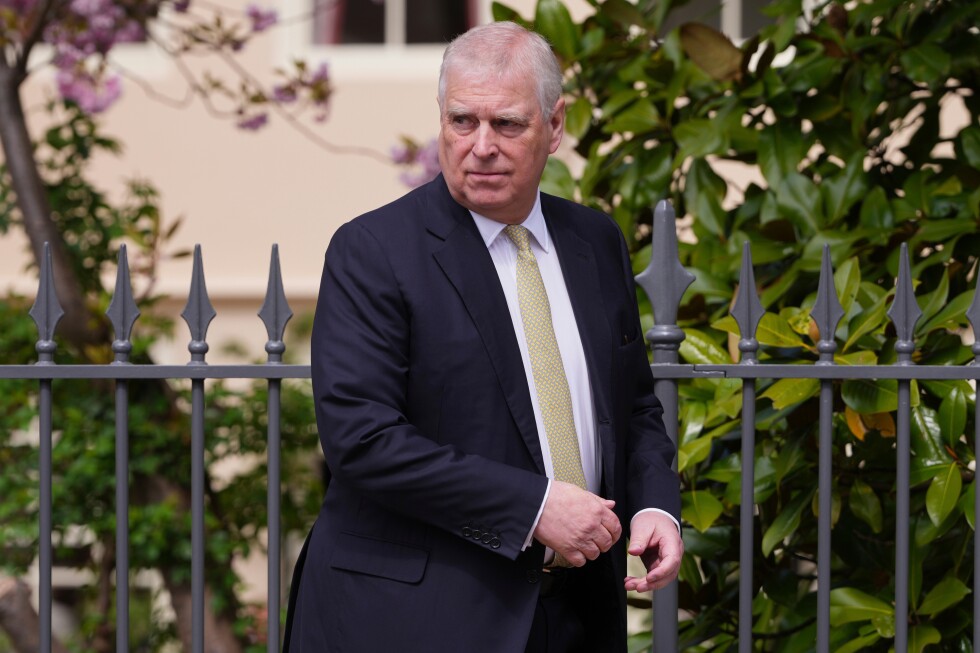
LONDON — The British monarchy confronts renewed reputational damage as newly unsealed U.S. Justice Department documents expose troubling communications between Jeffrey Epstein and a correspondent identified as Andrew Mountbatten-Windsor, formerly known as Prince Andrew.
The evidence, emerging from the Epstein investigation, includes explicit email exchanges showing Epstein’s invitation for a Buckingham Palace dinner, his offer to introduce the royal figure to a “26-year-old Russian, clever beautiful, trustworthy” woman, and controversial photographs depicting Andrew kneeling over an unidentified female with redacted features.
This development follows King Charles III’s decisive action three months prior, when he stripped his brother of all royal titles and privileges in an effort to shield the institution from continuous scandal. The disgraced royal now operates simply as Andrew Mountbatten-Windsor, though the latest revelations further cement his status as a liability to the crown.
Constitutional monarchy expert Craig Prescott of Royal Holloway, University of London, noted that the palace’s preemptive measures have likely contained the damage to Andrew personally rather than the institution itself. “They had to implement the nuclear option to clearly separate Andrew from the rest of the family,” Prescott stated, adding that subsequent disclosures appear to justify this severe approach.
The correspondence, dating to August 2010 shortly after Epstein’s release from home detention, reveals disturbingly casual arrangements. In one exchange, ‘The Duke’ (then Andrew’s official title) enthusiastically accepts Epstein’s dinner proposition with the unknown Russian woman, asking only for “any other information you might know about her that might be useful to know.”
Former BBC royal correspondent Jennie Bond expressed astonishment at the security implications, questioning: “What was he thinking when Epstein offered him a 26-year-old Russian very beautiful lady to have dinner with? Was there no red light saying, ‘Oh my goodness, is this a security risk? Could she be a spy?’”
Additional messages include Andrew’s invitation for Epstein to dine at Buckingham Palace with the promise of “lots of privacy,” to which Epstein simply replied “bp please.”
The document release reinforces long-standing concerns about Andrew’s judgment regarding his association with Epstein, which began in 2008 when the financier pleaded guilty to soliciting a minor for prostitution. The relationship intensified in 2011 when Virginia Giuffre alleged Epstein trafficked her to Andrew while she was underage.
Andrew has consistently denied all criminal allegations. His disastrous 2019 BBC interview, intended to quell controversy, instead amplified scrutiny through unconvincing explanations and apparent lack of empathy for Epstein’s victims.
While the latest documents raise serious questions about conduct within elite circles, Prescott concludes that Andrew’s reputation has been irreparably damaged, leaving the palace with limited options for further sanction beyond the already implemented severance from royal duties.