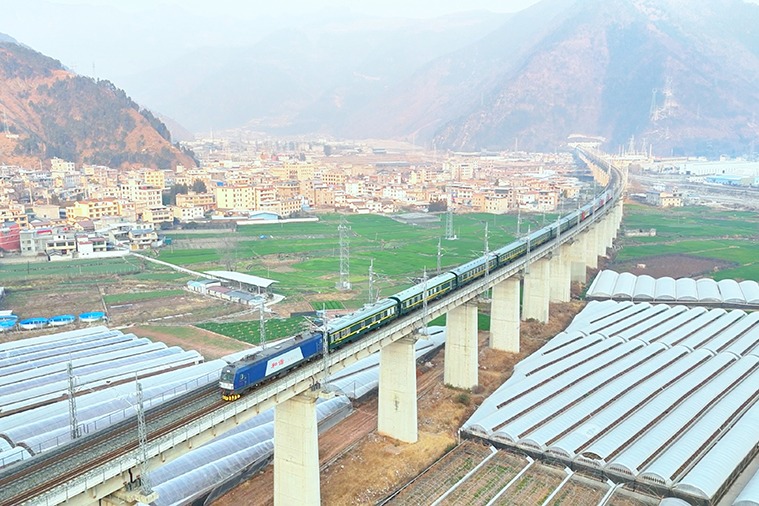
In an innovative approach to healthcare delivery, a specially designed panda-themed medical train has successfully completed a three-day humanitarian mission to the remote Liangshan Yi Autonomous Prefecture in Sichuan Province. The initiative, which concluded on January 30, 2026, brought essential medical services to underserved populations in one of China’s most mountainous regions.
The Panda Health Train departed from Chengdu carrying a comprehensive medical team of over 70 volunteer healthcare professionals from West China Hospital of Sichuan University. Led by hospital president Luo Fengming, the team established temporary medical stations at multiple railway locations, providing free consultations, treatments, and health education to local residents and railway workers alike.
Beyond the mobile clinics, senior medical specialists conducted knowledge-transfer sessions at the First People’s Hospital of Liangshan, sharing advanced medical techniques and contemporary healthcare methodologies through hands-on training and professional development workshops.
Railway worker Mr. Li expressed appreciation for the initiative: “The doctors thoroughly addressed my health concerns and provided practical advice tailored to our working conditions. This personalized attention truly demonstrates care for frontline workers.”
President Luo emphasized the strategic importance of the collaboration with China Railway Chengdu Group: “Utilizing rail infrastructure to deliver quality medical resources to remote mountainous areas represents a cornerstone of our commitment to grassroots healthcare and rural revitalization efforts. We’re pioneering a sustainable model for mobile medical services that bridges urban medical excellence with rural healthcare needs.”
Since its inaugural journey in 2021, the Panda Health Train program has significantly expanded its impact, now having provided free medical services to more than 18,000 beneficiaries throughout the Liangshan region. Both institutions have committed to further developing this collaborative framework, with plans to establish a regularized mobile medical service mechanism for long-term healthcare improvement in remote communities.