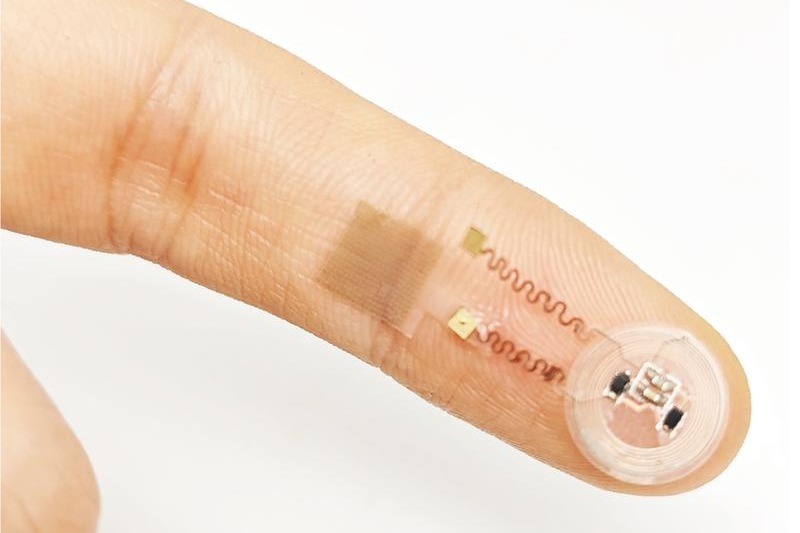
An international research consortium led by Beihang University has unveiled a groundbreaking bioelectronic patch technology that promises to revolutionize targeted therapeutic delivery to complex organs. Dubbed POCKET, this ultra-flexible device represents a paradigm shift from conventional systemic drug administration by conforming precisely to irregular organ surfaces like ovaries and kidneys.
The innovation addresses a critical clinical dilemma: women with hereditary BRCA1 mutations currently face radical preventive surgery involving ovary and fallopian tube removal, resulting in permanent infertility. Existing viral vector gene therapies pose unacceptable risks of germline genome contamination, making them unsuitable for reproductive organs.
Drawing inspiration from traditional paper-cutting artistry, the multidisciplinary team engineered a four-layer nanostructured patch achieving over 95% surface coverage on anatomically complex organs. The device integrates silver nanowire electrodes, a drug-loaded hydrogel reservoir, and precisely patterned nanopores created through femtosecond laser processing.
When activated by low-voltage current, POCKET generates localized electric fields that temporarily create microscopic channels in cell membranes. This electroporation mechanism allows direct intracellular drug delivery with nearly 1,000-fold efficiency improvement over passive diffusion while preserving deeper tissue integrity.
In preclinical models, the technology successfully delivered BRCA1 gene therapy exclusively to ovarian surface cells in mice, reducing cancer risk without compromising reproductive function. Additional trials demonstrated targeted anti-inflammatory delivery to transplanted kidneys, protecting renal function while eliminating systemic side effects associated with oral steroids.
Co-corresponding author Chang Lingqian from Beihang University emphasized the platform’s adaptability for treating diabetes, retinal disorders, and rheumatoid arthritis. This physical delivery approach avoids genetic contamination risks while enabling precision targeting previously unattainable with conventional methods.
The research, published in Cell on January 30, 2026, marks a significant advancement in bioelectronic medicine, potentially transforming treatment paradigms for sensitive and structurally complex organs throughout the human body.