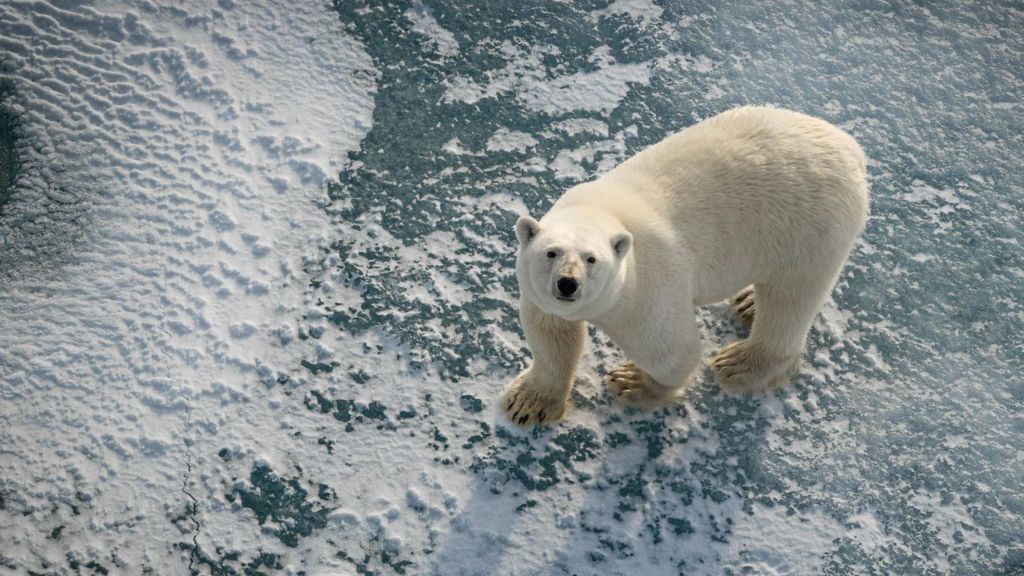
In a remarkable ecological paradox challenging scientific expectations, polar bears in Norway’s Svalbard archipelago have demonstrated significant improvements in body condition despite accelerating sea ice loss driven by climate change. Published in Scientific Reports, comprehensive research conducted by the Norwegian Polar Institute between 1992-2019 documented surprising physiological adaptations among the region’s apex predators.
Researchers meticulously assessed 770 adult polar bears during the 27-year study period, discovering that contrary to predictions, the animals had become substantially heavier and healthier despite the region losing approximately 100 ice-free days annually. This counterintuitive finding directly contradicts established understanding of polar bear ecology, as these mammals traditionally depend on sea ice as their primary hunting platform for capturing blubber-rich seals.
Dr. Jon Aars, lead researcher at the Norwegian Polar Institute, expressed both surprise and cautious optimism: ‘The fatter a bear is the better it is. I would have expected to see a decline in body condition when the loss of sea ice has been so profound.’ The study reveals that Svalbard’s polar bears have developed adaptive hunting strategies, increasingly targeting land-based prey including reindeer and walruses to supplement their traditional seal-based diet.
This dietary shift has been facilitated by Norway’s successful conservation efforts. Walruses, once hunted to near extinction in the 1950s, have rebounded significantly under official protection, creating an unexpected food source for resourceful bears. Additionally, researchers speculate that concentrated seal populations in diminishing ice areas may actually improve hunting efficiency for polar bears in certain circumstances.
However, scientists emphasize this represents a temporary reprieve rather than a long-term solution. As Dr. John Whiteman, chief research scientist at Polar Bears International, notes: ‘Body condition is only one piece of the puzzle. Other recent research on these bears found that more ice-free days reduced survival in cubs and in subadult and old females.’
The study highlights significant regional variations in climate change impacts across the Arctic’s 20 recognized polar bear subpopulations. While Svalbard bears currently thrive, the Western Hudson Bay population in Canada—among the most southerly and extensively studied groups—has experienced direct population declines correlated with warming temperatures.
Experts conclude that despite this temporary adaptation, the fundamental reality remains unchanged: polar bears ultimately require sea ice for long-term survival. As ice loss continues unchecked across their range, researchers warn that these temporary gains will eventually give way to the broader pattern of climate-driven decline affecting most polar bear populations worldwide.