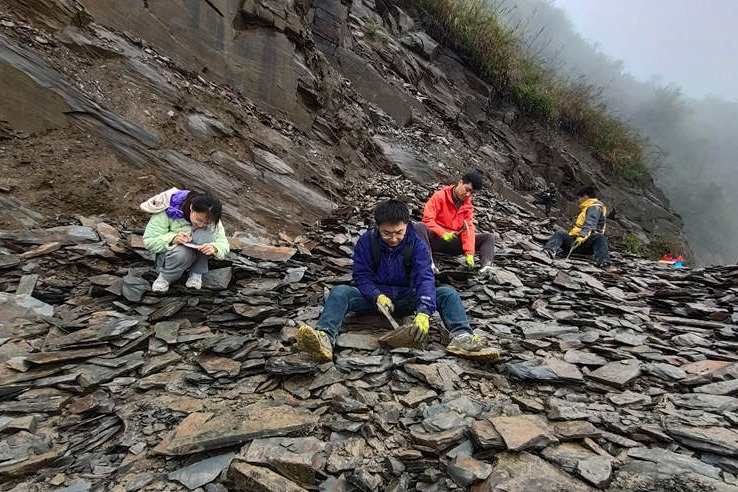
A groundbreaking fossil discovery in central China is transforming scientific understanding of Earth’s earliest mass extinction event that occurred approximately 513 million years ago. Researchers from the Nanjing Institute of Geology and Palaeontology at the Chinese Academy of Sciences (NIGPAS) have uncovered an extraordinary collection of ancient marine fossils that provides unprecedented insight into how life persisted through the catastrophic Sinsk extinction event.
The Huayuan Biota, named after its discovery location in Hunan province, represents a treasure trove of exceptionally preserved soft-bodied organisms dating to about 512 million years ago—immediately following the devastating extinction that eliminated 41-49% of marine species. The discovery site, accidentally exposed during road construction in 2020, has yielded over 50,000 fossils to date, with preliminary analysis identifying 153 animal species, 59% of which are previously unknown to science.
What distinguishes this find is the remarkable preservation quality, capturing delicate anatomical features including digestive systems, neural tissues, and gill structures in organisms ranging from primitive worms and jellyfish to early chordates. This level of detail provides scientists with an unprecedented window into a complete ancient ecosystem that flourished in deep-water environments while shallow marine habitats experienced catastrophic collapse.
The research, published in Nature, demonstrates that the Sinsk extinction event—triggered by widespread ocean deoxygenation—disproportionately devastated sunlit, nearshore environments while deeper ocean zones served as crucial refuges where biodiversity persisted relatively unscathed. This differential survival pattern explains how marine life eventually rebounded from this planetary crisis.
Additionally, the Huayuan Biota reveals surprising global connections, sharing numerous species with the renowned Burgess Shale formation in North America despite the vast oceanic separation between these continents during the Cambrian period. This suggests that certain marine organisms possessed unexpected dispersal capabilities across immense distances.
International paleontologists have hailed the discovery as one of global significance, with the site’s diversity rivaling the world’s most celebrated fossil localities. According to NIGPAS researcher Zhu Maoyan, this finding not only illuminates a pivotal chapter in Earth’s evolutionary history but also provides valuable insights into ecosystem resilience and recovery mechanisms following planetary-scale disturbances.