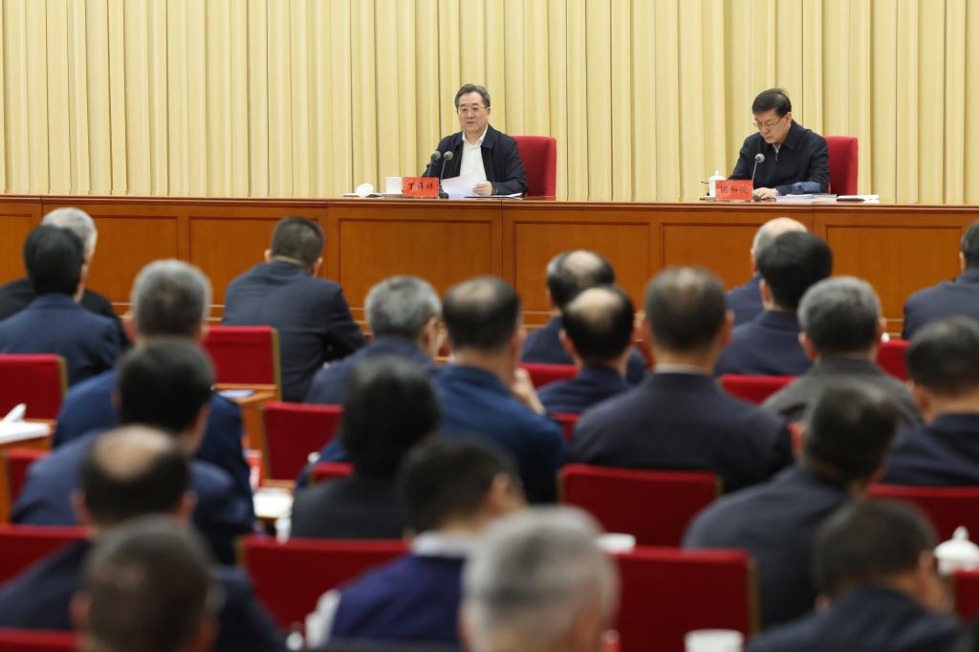
In a significant national address, China’s top science official Ding Xuexiang has outlined an ambitious roadmap for the country’s technological future, emphasizing the critical need for sustained progress and self-reliance in scientific capabilities. Speaking at Monday’s National Conference on Science and Technology in Beijing, the senior official who directs China’s Central Science and Technology Commission called for comprehensive strengthening of the nation’s innovation ecosystem.
Ding, who also serves on the Standing Committee of the Political Bureau of the Communist Party Central Committee, highlighted the remarkable achievements during China’s 14th Five-Year Plan period (2021-2025), noting that scientific innovation has become a strategic pillar supporting the country’s modernization drive while comprehensively enabling high-quality development.
The official emphasized several key priorities including bolstering fundamental research capabilities, enhancing China’s autonomous innovation capacity, and improving basic conditions for scientific research. Ding specifically called for leveraging strategic scientific and technological strengths while simultaneously deepening international collaboration in science and technology.
A central focus of the address was the integration of technological innovation with industrial advancement. Ding urged strengthening the leading role of enterprises in innovation, accelerating the establishment of a science and technology financial system, and improving guidance for developing new quality productive forces.
The human capital dimension featured prominently in the speech, with Ding stressing the importance of expanding China’s science and engineering talent pool and advancing the construction of international sci-tech innovation centers. This comprehensive approach signals China’s commitment to building a robust, self-reliant scientific ecosystem that can compete globally while maintaining international cooperation.