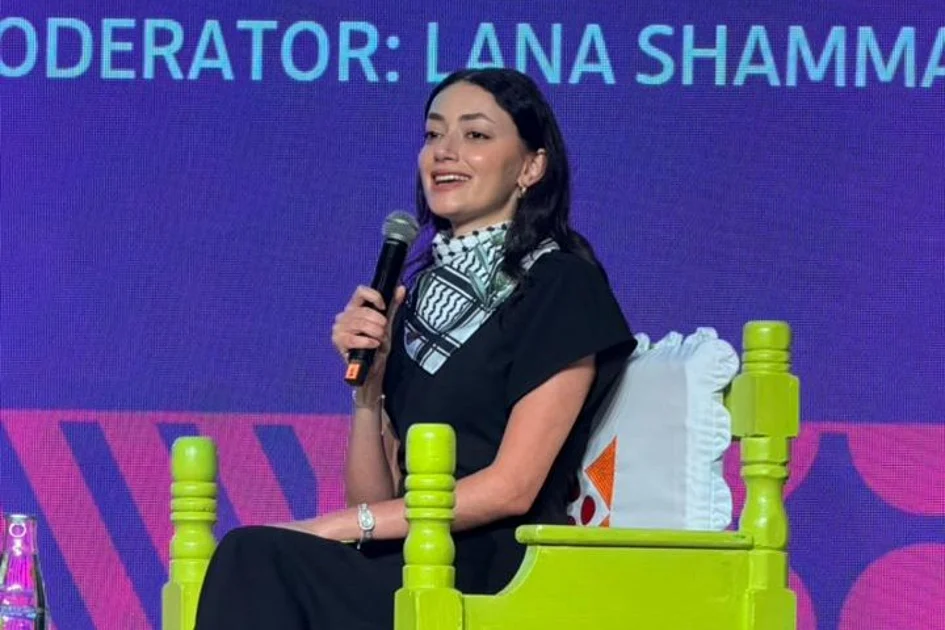
At the Emirates Airline Festival of Literature, Palestinian journalist and author Plestia Alaqad delivered a poignant testimony on the profound personal toll of displacement and the complex burden of public visibility. Having fled Gaza with her family in November 2023 with merely five minutes to gather her belongings, Alaqad articulated a fractured sense of identity, moving between Australia and Lebanon without permanent residency in either nation.
Alaqad described the perpetual instability of life in exile, a reality defined by constantly renewing visas and justifying her right to exist in a place. ‘You’re always renewing visas, proving yourself, explaining where you belong,’ she stated. ‘And no place ever fully feels like home again.’ This relentless transience has reshaped her understanding of belonging, reducing personal possessions until ‘all that remained was your truth and your words.’
The journalist, who garnered a global following of over four million for her reporting from Gaza, revealed the immense pressure that accompanies such visibility. She noted that even a single day of social media silence triggers panic among her audience, with many fearing she had been killed. ‘The more visible you become, the more targeted you are,’ Alaqad explained, detailing how this surveillance seeped into her most private spaces, even causing her to censor her own diary entries for her book, ‘The Eyes of Gaza’.
This work, a blend of diary entries, reflections, and poetry written between October 2023 and January 2025, documents her life under bombardment and exile. The publishing process itself became a battleground for narrative control. Alaqad disclosed intense scrutiny from publishers and lawyers in the United States who debated politically charged language, often seeking to soften her account. She firmly resisted, asserting, ‘You can’t censor someone’s lived experience.’
Reflecting on her career choice, Alaqad framed journalism not as a mere profession but as a mission born from the Palestinian experience of being dehumanized. ‘I saw how dehumanised we were. I wanted to reclaim the narrative,’ she told the audience, adding that Palestinians often grow up with missions rather than dreams. Without occupation, she mused, she might have pursued her passion for theater and comedy.
Despite the weight of her testimony, Alaqad emphasized the importance of recognizing human limits and mental health, rejecting the notion that witnesses must be superheroes. She concluded by looking forward, revealing plans to explore storytelling through acting, including a role in an upcoming film centered on Palestine.